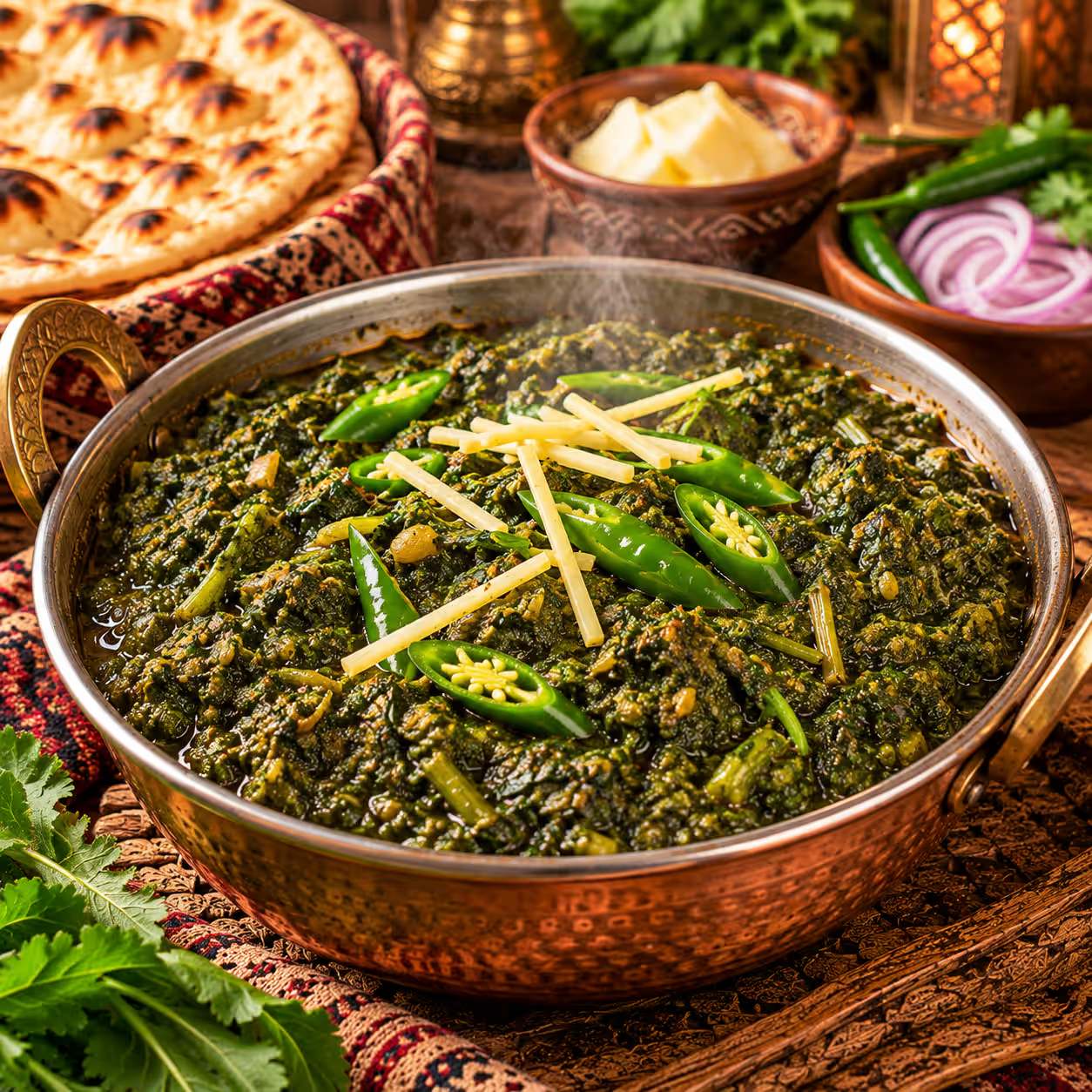
Punjabi saag is a traditional leafy-green dish deeply associated with Punjabi food culture and especially with the colder months. Rather than referring to one single vegetable or one fixed recipe, saag is a broad term used for cooked leafy greens. Different households and regions may use mustard greens, spinach, bathua, turnip greens, radish greens or combinations of seasonal leaves.
In Punjabi cooking, saag is valued for its earthy flavor, soft texture and ability to turn simple seasonal greens into a satisfying meal. One of its best-known pairings is makki di roti, creating a combination that has become closely associated with Punjabi food traditions.
The preparation of Punjabi saag can vary significantly. Some cooks prefer a coarse texture that allows the individual greens to remain recognizable, while others cook and mash the leaves into a smoother, thicker preparation. Ginger, garlic, green chilies, onions, tomatoes, cornmeal and Punjabi spices may be used depending on the style.
This guide explores what Punjabi saag means, the greens commonly used, how the dish fits into Punjabi cuisine, its seasonal importance, traditional cooking principles, regional and household variations, serving customs, storage, common mistakes and frequently asked questions.
What Is Punjabi Saag?
Punjabi saag is a cooked preparation of leafy green vegetables associated with Punjabi cuisine.
The word saag is broader than the name of one particular green. It can describe preparations made from different edible leaves, either individually or in combination.
Common greens used in Punjabi-style saag include:
- Mustard greens
- Spinach
- Bathua
- Turnip greens
- Radish greens
- Fenugreek leaves
- Other locally available leafy vegetables
The exact combination depends on season, location, availability and household tradition.
This is important because Punjabi saag does not have one universally fixed ingredient list.
A dish made primarily with mustard greens may have a stronger, slightly bitter and earthy flavor, while a spinach-rich combination may be softer and milder.
Punjabi Saag and Punjabi Cuisine
Punjabi cuisine is known for combining seasonal vegetables, grains, legumes, dairy, meat and aromatic spices into substantial meals.
Saag represents an important vegetable-based side of this culinary tradition.
Unlike dishes that depend heavily on meat, saag allows leafy vegetables to become the main component of a meal.
It can be served as:
- A main vegetarian dish
- A side dish
- Part of a winter meal
- A family lunch
- A traditional Punjabi spread
Explore the broader [Punjabi Cuisine] pillar to see how saag connects with other Punjabi dishes.
Why Saag Is Associated With Winter
Punjabi saag is particularly associated with winter because many of the leafy greens traditionally used in saag are seasonal cool-weather vegetables.
Winter also changes the way people approach food.
Hearty, warm dishes become particularly appealing, and freshly cooked saag provides a substantial vegetable-based component for a family meal.
Seasonality also has a practical dimension.
Historically, cooks have worked with the ingredients available in their local environment rather than following a year-round standardized shopping list. As a result, the composition of saag can change from one season or region to another.
Which Greens Are Used in Punjabi Saag?
The choice of greens is one of the most interesting aspects of the dish.
Mustard Greens
Mustard greens, commonly known as sarson, are strongly associated with the classic Punjabi winter preparation.
They have a distinctive earthy, slightly bitter and peppery character.
This is why [Sarson Ka Saag] deserves its own dedicated place in the content cluster.
Spinach
Spinach can provide a milder flavor and softer texture.
It is often combined with stronger-tasting greens to create balance.
Bathua
Bathua is a seasonal leafy green used in parts of South Asian cooking.
Its flavor and texture can contribute additional complexity to a mixed saag.
Turnip Greens
Turnip leaves can be used as part of a mixed-green preparation.
They contribute a slightly earthy flavor and help make use of the entire seasonal vegetable.
Radish Greens
Radish leaves can also be incorporated into saag.
They bring a characteristic green, slightly peppery quality.
Fenugreek Leaves
Fresh fenugreek leaves can contribute a distinctive aromatic flavor.
Because fenugreek can be relatively strong, it is often balanced with milder greens.
What Does Punjabi Saag Taste Like?
The flavor depends heavily on the greens used.
A traditional mixed-green saag can have:
- Earthy notes
- Slight bitterness
- Mild sweetness
- Fresh herbal flavors
- Gentle heat
- Savory depth
Mustard greens generally provide stronger character, while spinach can soften the overall profile.
The final flavor also depends on how long the greens are cooked and which aromatics are added.
Why Different Greens Are Combined
Combining greens is not simply a way to increase the number of vegetables.
Different leaves contribute different characteristics.
One green may provide:
- Strong flavor
Another may provide:
- Soft texture
Another may contribute:
- Freshness
Another may provide:
- Mild sweetness
A carefully balanced mixture can therefore create a more complex dish than using a single leafy vegetable.
This flexibility is one reason Punjabi saag varies so much from household to household.
Ingredients Commonly Used in Punjabi Saag
There is no single universal recipe, but several ingredients commonly appear.
Leafy Greens
The greens form the foundation of the dish.
The combination depends on availability and the style being prepared.
Ginger
Fresh ginger provides warmth and aromatic freshness.
Garlic
Garlic adds savory depth and works particularly well with earthy greens.
Green Chilies
Green chilies contribute fresh heat.
They can be adjusted according to preference.
Onion
Some versions use onion to create sweetness and body.
Other traditional preparations may use little or no onion.
Tomato
Tomatoes can add acidity and moisture.
However, they are not essential to every saag preparation.
Cornmeal or Makki Flour
A small amount of cornmeal or makki flour may be used in some preparations to thicken the saag and create a characteristic texture.
The quantity should be controlled because excessive flour can make the dish heavy and mask the natural flavor of the greens.
Pakistani Spices Used in Punjabi Saag
Saag does not necessarily require a large spice mixture.
Commonly used seasonings can include:
- Salt
- Red chili
- Green chili
- Cumin
- Coriander
- Turmeric
- Black pepper
- Garam masala
Some versions rely more heavily on the flavor of the greens and use relatively few spices.
This is an important characteristic of good vegetable cooking: seasoning should enhance the main ingredient rather than completely cover it.
Readers can explore [Pakistani Spices] to understand how these seasonings are used across Pakistani cuisine.
How Punjabi Saag Is Traditionally Cooked
The traditional approach emphasizes slow cooking and careful texture development.
Preparing the Greens
The greens should be thoroughly washed because leafy vegetables can contain soil or grit.
They are then trimmed and chopped.
Different leaves may require slightly different preparation depending on their stems and texture.
Cooking the Greens
The greens are cooked with a relatively small amount of liquid until they soften.
Slow cooking allows tougher leaves and stems to become tender.
Developing the Texture
Once the greens are tender, they can be mashed or blended to the desired consistency.
Some cooks prefer a coarse texture, while others prefer a smoother saag.
Adding Aromatics
Ginger, garlic, green chilies and other ingredients can be incorporated during or after the cooking process.
Finishing the Dish
The final seasoning is adjusted before serving.
Some preparations also use a separate tempering of oil or ghee with aromatics or spices.
Why Texture Matters in Punjabi Saag
Texture is one of the defining characteristics of the dish.
A saag that is too watery may taste diluted.
A saag that is excessively smooth may lose some of the rustic character associated with traditional preparations.
A very coarse preparation, however, may be difficult to eat if tougher stems have not been sufficiently cooked.
The ideal texture therefore depends on:
- Type of greens
- Cooking time
- Amount of liquid
- Whether the greens are mashed
- Whether they are blended
- Amount of thickener used
Coarse vs Smooth Saag
There are two broad approaches.
Coarse Saag
The greens are cooked until tender and then roughly mashed.
This preserves more visible texture and gives the dish a rustic appearance.
Smooth Saag
The cooked greens are blended or processed more thoroughly.
This produces a smoother consistency and can be easier to serve with bread.
Neither approach should automatically be considered the only authentic version.
Sarson Ka Saag and Punjabi Saag
Sarson ka saag is one of the best-known preparations associated with Punjabi cuisine.
The key distinction is that saag is a broader category, while sarson ka saag specifically emphasizes mustard greens.
A mixed Punjabi saag may contain mustard greens along with spinach, bathua or other leaves.
This distinction is useful for your site’s content architecture:
Punjabi Saag → broad informational/cultural topic
Sarson Ka Saag → specific dish and recipe topic
This allows both pages to provide unique value without simply repeating one another.
Punjabi Saag with Makki Di Roti
Few combinations are more strongly associated with Punjabi food culture than saag and makki di roti.
Makki di roti is a flatbread made primarily from maize flour.
Its slightly grainy texture and earthy corn flavor complement the soft, savory greens.
The combination is often served with additional ingredients such as:
- Butter
- Ghee
- Yogurt
- Pickles
- Green chilies
- Raw onion
For a detailed accompaniment page, connect this article to [Makki Di Roti].
Why Makki Di Roti Works So Well With Saag
The two foods provide contrasting characteristics.
Saag is:
- Soft
- Moist
- Earthy
- Vegetable-forward
Makki di roti is:
- Firm
- Grainy
- Rustic
- Mildly sweet from corn
Together they create a balanced eating experience.
This pairing also demonstrates an important principle in Punjabi cuisine: a meal is often defined by the relationship between dishes rather than by one dish alone.
Other Ways to Serve Punjabi Saag
Although makki di roti is the classic association, saag can also be served with:
- Roti
- Chapati
- Paratha
- Naan
- Rice
Yogurt, pickles and fresh onions can also provide useful contrast.
The best accompaniment depends on the type of saag and the overall meal.
Punjabi Saag as a Vegetarian Dish
Punjabi saag is naturally suited to vegetarian cooking.
Leafy greens can form the main component of the meal rather than simply functioning as a garnish or side vegetable.
A vegetarian Punjabi meal might combine saag with:
- Makki di roti
- Dal
- Yogurt
- Pickles
- Seasonal vegetables
- Salad
Readers looking for more plant-based dishes can explore your [Vegetarian Recipes] section.
Punjabi Saag and Healthy Cooking
Leafy greens can contribute valuable nutrients to a balanced diet, but the nutritional profile of a finished saag depends on the ingredients and cooking method.
For example, a preparation cooked with modest amounts of oil can differ considerably from one finished with a large amount of butter or ghee.
The same principle applies to the accompaniments.
Saag served with a simple roti is different nutritionally from saag served with large quantities of butter and rich breads.
This is why it is more useful to discuss saag as a nutrient-rich vegetable-based dish that can fit into balanced eating rather than describing every preparation as universally “healthy.”
For broader vegetable-focused cooking ideas, connect this article to [Healthy Cooking].
Does Cooking Greens Destroy Their Nutrients?
Cooking changes the nutritional composition of vegetables, but it does not make them nutritionally useless.
The effect depends on:
- Cooking temperature
- Cooking time
- Amount of water
- Whether cooking liquid is discarded
- Type of vegetable
Since saag is generally cooked with its cooking liquid rather than boiled and drained completely, much of the cooked mixture remains part of the final dish.
The practical goal is to cook the greens sufficiently to achieve good texture and flavor without unnecessarily overcooking them.
Traditional Punjabi Home Cooking
Punjabi saag is particularly representative of home cooking because it can be adapted to whatever seasonal greens are available.
A family might prepare it with a different mixture from another household.
The cooking process may also differ:
- One cook may mash the greens by hand.
- Another may use a blender.
- One family may add cornmeal.
- Another may rely entirely on reduction.
- One household may use more garlic.
- Another may emphasize ginger and green chili.
These differences do not necessarily make one preparation more legitimate than another.
They demonstrate how culinary traditions evolve within families.
Punjabi Saag and Seasonal Cooking
Seasonal cooking is an important concept in traditional Punjabi food culture.
Instead of treating every vegetable as equally available throughout the year, traditional cooking often makes use of ingredients when they are naturally abundant.
Winter greens can therefore become central to seasonal meals.
This approach can provide several practical advantages:
- Fresh seasonal produce
- Greater variety
- Economical cooking
- Traditional flavor
- Connection to local agricultural cycles
Punjabi Saag in Family Meals
A large pot of saag can serve multiple people, making it practical for family dining.
It can also be reheated, although its texture may change slightly after refrigeration.
Because the dish works with several breads, families can adapt the meal according to what is available.
This flexibility is one reason vegetable-based dishes remain important in traditional home cooking.
Punjabi Saag vs Palak
Punjabi saag and palak are related but not necessarily identical.
Palak refers specifically to spinach.
Saag is a broader term for cooked leafy greens.
Therefore, a spinach-only preparation can be described as palak, while a mixed leafy-green preparation may be called saag.
The terminology can vary depending on the household and regional context.
Punjabi Saag vs Sarson Ka Saag
The terms are closely related but have different levels of specificity.
| Dish | Main idea |
|---|---|
| Punjabi saag | Broad leafy-green preparation |
| Sarson ka saag | Preparation centered on mustard greens |
| Palak | Spinach-based preparation |
| Mixed saag | Combination of multiple leafy greens |
This distinction is useful when organizing recipes and informational pages on a food website.
Common Mistakes When Making Punjabi Saag
Not Washing Greens Properly
Leafy vegetables can retain dirt and grit.
Thorough washing is essential.
Adding Too Much Water
Excessive water can produce a thin, diluted saag.
Start conservatively and add more only when necessary.
Overusing Thickener
Cornmeal or makki flour should support the texture rather than dominate it.
Over-Blending
An excessively smooth texture can remove some of the rustic character of the dish.
Using Too Much Spice
Strong spices can hide the natural flavor of the greens.
Undercooking Tough Greens
Some leaves and stems require sufficient cooking time to become tender.
Burning the Tempering
A tempering made with oil or ghee and spices can burn quickly.
Keep the heat controlled and add the ingredients carefully.
Why Is My Saag Bitter?
Some bitterness is natural, especially when using mustard greens.
However, excessive bitterness may result from:
- Using a very high proportion of strong greens
- Including too many mature leaves or stems
- Overcooking
- Insufficient balancing ingredients
Combining stronger greens with milder greens such as spinach can help create a more balanced flavor.
Why Is My Saag Watery?
Watery saag may result from:
- Too much cooking liquid
- Greens releasing more water than expected
- Insufficient reduction
- Adding too much water during cooking
If the greens are already tender, continue cooking gently without excessive covering so that some moisture can evaporate.
Why Is My Saag Too Thick?
A thick saag can usually be adjusted by adding a small amount of warm water or cooking liquid.
Add liquid gradually rather than all at once.
The goal is a spoonable, cohesive texture rather than a thin soup.
Can Punjabi Saag Be Made Without Mustard Greens?
Yes.
Mustard greens are strongly associated with Punjabi saag, but saag is a broader category of leafy-green preparations.
Spinach, bathua, turnip greens, radish greens and other edible leaves can be used depending on the desired flavor and availability.
Can Punjabi Saag Be Made with Spinach?
Yes.
Spinach can be used alone or combined with stronger greens.
A spinach-heavy saag generally has a milder flavor and softer texture.
Can Punjabi Saag Be Made Without Cornmeal?
Yes.
Cornmeal is used in some preparations to help with thickness and texture, but it is not mandatory for every saag.
The greens can be cooked down and mashed until the desired consistency is achieved naturally.
Can Punjabi Saag Be Made Vegan?
Yes.
A vegetable-based saag can be prepared without dairy.
If the traditional finishing ingredient is butter or ghee, it can be omitted or replaced with an appropriate plant-based cooking fat.
The greens, spices, ginger, garlic and chilies can still provide substantial flavor.
Can Punjabi Saag Be Made Ahead?
Yes.
Saag is well suited to advance preparation.
After cooking, it can be cooled appropriately and refrigerated in a clean, covered container.
When reheating, warm it gently and adjust the consistency with a small amount of water if necessary.
Fresh garnishes can be added after reheating.
Can Punjabi Saag Be Frozen?
Yes, cooked saag can generally be frozen.
For best results:
- Cool the cooked saag appropriately.
- Divide it into practical portions.
- Use airtight freezer-safe containers.
- Thaw safely.
- Reheat gently.
- Adjust consistency after reheating.
The texture may change slightly after freezing, but this is usually manageable.
Punjabi Saag and Pakistani Spices
Unlike some meat curries, saag does not require an aggressive spice mixture.
The leafy greens should remain recognizable in the final dish.
A balanced seasoning might use:
- Garlic for depth
- Ginger for warmth
- Green chili for freshness
- Cumin for earthiness
- Red chili for heat
- Salt to bring out the natural flavor
The exact combination should depend on the greens being used.
The Role of Garlic in Saag
Garlic is particularly effective with leafy greens because its savory character complements earthy and slightly bitter flavors.
It can be incorporated during cooking or used in a final tempering.
The quantity can be adjusted according to the strength of the greens.
The Role of Ginger
Ginger contributes warmth and freshness.
It can help balance the heavier, earthy character of mustard greens and other robust leaves.
Fresh ginger generally gives a brighter result than relying exclusively on dried ginger powder.
The Role of Green Chilies
Green chilies provide both aroma and heat.
They can be added during cooking for a more integrated flavor or near the end for a fresher chili character.
The amount should be adjusted according to the heat tolerance of the people eating the dish.
Punjabi Saag and the Wider Pakistani Food Tradition
Punjabi saag is one example of the enormous variety found within Pakistani cuisine.
Pakistani regional cooking includes many different approaches to:
- Leafy greens
- Lentils
- Vegetables
- Meat
- Rice
- Flatbreads
- Dairy
- Pickles
- Chutneys
Saag demonstrates how vegetables can be treated as the central element of a meal rather than as a minor side dish.
For readers exploring the wider food tradition, connect this article with [Traditional Pakistani Dishes].
Punjabi Saag as Part of Punjabi Food Heritage
Food heritage is not only about preserving exact recipes.
It also includes:
- Seasonal ingredients
- Cooking techniques
- Family habits
- Serving customs
- Local agriculture
- Food combinations
- Shared meals
Punjabi saag illustrates this well.
A family may change the exact combination of greens while maintaining the same broader idea: cook seasonal leafy vegetables slowly, season them thoughtfully and serve them with complementary foods.
How Punjabi Saag Fits Into a Modern Kitchen
Traditional cooking does not require abandoning modern equipment.
Today, cooks may use:
- Pressure cookers
- Food processors
- Immersion blenders
- Non-stick cookware
- Refrigerators and freezers
The important question is how the equipment affects the final texture.
A blender can save time, for example, but excessive blending may produce a texture that differs from hand-mashed saag.
Modern tools can therefore simplify the process while still allowing the traditional character of the dish to remain.
Frequently Asked Questions About Punjabi Saag
What is Punjabi saag?
Punjabi saag is a cooked leafy-green preparation associated with Punjabi cuisine. It may contain mustard greens, spinach, bathua, turnip greens, radish greens or other seasonal leaves.
Is Punjabi saag the same as sarson ka saag?
Not exactly. Saag is a broader category of cooked leafy greens, while sarson ka saag specifically emphasizes mustard greens.
What greens are used in Punjabi saag?
Common options include mustard greens, spinach, bathua, turnip greens, radish greens and fenugreek leaves. The combination varies by household and season.
What does Punjabi saag taste like?
It is generally earthy, savory and slightly bitter when mustard greens are used. The flavor becomes milder when spinach and other softer greens are included.
What is traditionally served with Punjabi saag?
The best-known pairing is makki di roti. Saag can also be served with roti, paratha, naan or rice.
Why is saag associated with winter?
Many of the leafy greens traditionally used for saag are cool-season vegetables, making the dish particularly associated with winter meals.
Can I make Punjabi saag with spinach?
Yes. Spinach can be used alone or combined with stronger greens.
Does Punjabi saag need cornmeal?
No. Some preparations use cornmeal or makki flour to improve thickness and texture, but it is not essential to every version.
Is Punjabi saag vegetarian?
Yes. A traditional vegetable-based saag can be completely vegetarian.
Can Punjabi saag be vegan?
Yes. Simply prepare the dish without butter or ghee and use a suitable plant-based cooking fat if required.
How do I reduce the bitterness of saag?
Combining stronger greens such as mustard greens with milder greens such as spinach can help. Proper seasoning and balanced acidity can also improve the overall flavor.
Why is my saag watery?
Too much cooking liquid or insufficient reduction can produce watery saag. Cook gently until excess moisture evaporates.
Can Punjabi saag be frozen?
Yes. Cooked saag can generally be frozen in airtight portions and reheated gently.
Related Punjabi Food to Explore
Readers who enjoy Punjabi saag can continue exploring related topics:
- Punjabi Cuisine — the broader regional food tradition
- Traditional Pakistani Dishes — classic Pakistani dishes
- Vegetarian Recipes — more vegetable-focused meals
- Sarson Ka Saag — mustard-green focused preparation
- Makki Di Roti — traditional cornmeal flatbread
- Pakistani Spices — understanding the seasonings used across the cuisine
- Healthy Cooking — practical vegetable-focused cooking ideas
- Punjabi Home Cooking — everyday Punjabi food traditions
These internal connections should be placed naturally throughout the site rather than concentrated in a single block.
Punjabi Saag: Key Takeaways
Punjabi saag is best understood as a family of cooked leafy-green preparations, not one rigid recipe.
Its most important characteristics include:
- Seasonal leafy vegetables
- Earthy and savory flavors
- Flexible combinations of greens
- Ginger, garlic and chilies
- Moderate use of spices
- Slow cooking
- A soft, cohesive texture
- Strong connection with Punjabi winter food
- Traditional pairing with makki di roti
- Significant variation between households
Mustard greens are strongly associated with Punjabi saag, but other greens can contribute to the dish.
Final Thoughts
Punjabi saag represents the connection between seasonal vegetables, practical home cooking and Punjabi food culture.
Its simplicity is part of its appeal. Leafy greens that might otherwise be treated as ordinary vegetables are slowly cooked, seasoned and transformed into a substantial dish with its own distinctive character.
The famous pairing of saag with makki di roti further demonstrates how Punjabi meals often depend on complementary foods. The soft, earthy greens contrast naturally with the grainy texture of maize flatbread.
At the same time, Punjabi saag should not be reduced to one fixed formula. Different greens, spices, cooking methods and family traditions can produce different versions while retaining the central idea of a hearty leafy-green preparation.
For anyone exploring Pakistani cuisine, Punjabi saag provides an excellent example of how seasonality, vegetables, traditional techniques and food culture come together in everyday Punjabi cooking.