Pakistani Haleem – Traditional Lentil, Meat & Grain Dish
Pakistani haleem is a rich, slow-cooked dish made from a combination of lentils, grains, meat and aromatic spices. Its thick, smooth texture and deeply developed flavor make it one of the most recognizable traditional dishes in Pakistani cuisine.
Unlike a typical curry, haleem combines several different food groups in one preparation. Lentils and grains provide body and creaminess, while meat contributes savory depth. Spices, fried onions, ginger, green chilies, coriander and lemon are commonly used to create contrast and freshness.
Traditional Pakistani haleem is also strongly associated with communal cooking, restaurants, religious occasions and family gatherings. During Ramadan and Muharram, large quantities of haleem may be prepared and shared, although it is enjoyed throughout the year.
The dish has a broader history across South Asia and related culinary traditions, so Pakistani haleem should be understood as part of a wider regional food tradition while recognizing the distinctive place it occupies in Pakistani food culture.
This guide explains what Pakistani haleem is, how it developed as a food tradition, what ingredients define it, how traditional haleem is prepared, how regional and household versions differ, what it is served with, and why it remains an important part of Pakistani cuisine.
What Is Pakistani Haleem?
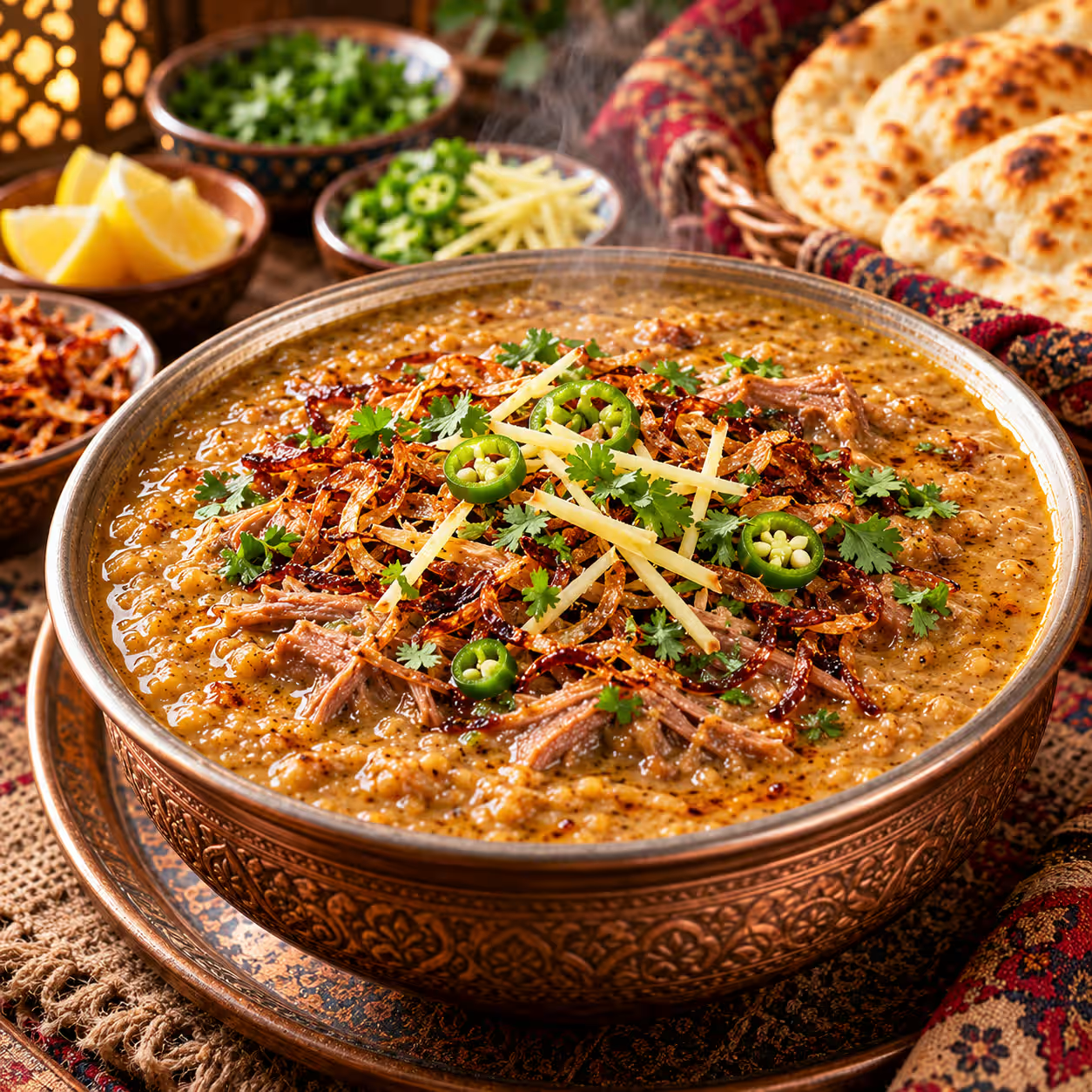
Pakistani haleem is a slow-cooked lentil, grain and meat dish with a thick, cohesive texture.
A traditional preparation may combine several types of lentils with wheat or other grains and meat such as beef, mutton or chicken. The ingredients are cooked until they become extremely soft and then combined into a thick mixture.
The final texture is one of haleem’s defining characteristics.
Instead of having clearly separated pieces of lentils, grains and meat, the long cooking process causes the ingredients to break down and blend together.
A bowl of Pakistani haleem commonly includes:
- Lentils
- Wheat or other grains
- Meat
- Ginger
- Garlic
- Fried onions
- Aromatic spices
- Green chilies
- Fresh coriander
- Lemon
- Additional fried onions for garnish
The precise combination differs according to family recipes, restaurants and regional traditions.
Why Is Haleem Important in Pakistani Food Culture?
Haleem has a distinctive position in Pakistani food culture because it is both a traditional dish and a food associated with community.
It is often prepared in large quantities for:
- Ramadan
- Muharram
- Family gatherings
- Religious and community events
- Special occasions
- Restaurant service
- Charity food distribution
Large pots of haleem are particularly suited to communal preparation because the dish requires extended cooking and benefits from careful stirring and gradual blending.
The dish can therefore represent more than an individual meal. It can become part of a shared food experience.
Haleem Food Pakistan: Its Place in Everyday Cuisine
Although haleem is particularly visible during special occasions, it is not limited to religious or ceremonial settings.
Pakistani restaurants may serve haleem as part of their regular menus, particularly alongside other traditional dishes.
It can be enjoyed as:
- Breakfast
- Lunch
- Dinner
- A substantial snack
- A Ramadan meal
- A family gathering dish
Its thick texture and combination of lentils, grains and meat make it filling and substantial.
What Does Pakistani Haleem Taste Like?
Pakistani haleem has a deep savory flavor with a warm, aromatic spice profile.
Because it contains several ingredients that are cooked together for an extended period, the final flavor is usually more integrated than that of a quickly prepared curry.
Depending on the recipe, haleem may have notes of:
- Slow-cooked meat
- Lentils
- Wheat or grains
- Fried onion
- Ginger
- Garlic
- Cumin
- Coriander
- Chili
- Garam masala
- Other whole or ground spices
The garnishes are important because they introduce flavors that contrast with the rich base.
Lemon adds acidity, green chilies add freshness and heat, coriander adds an herbal note, and fried onions provide sweetness and texture.
The Texture of Traditional Pakistani Haleem
Texture is one of the easiest ways to distinguish haleem from other Pakistani dishes.
A properly prepared haleem is:
- Thick
- Cohesive
- Soft
- Creamy or paste-like
- Rich
- Easy to scoop with bread
The ingredients should be thoroughly cooked so that the lentils and grains no longer feel firm.
However, haleem does not necessarily need to be completely smooth.
Some versions retain a little texture from the grains or meat, while others are blended or pounded more extensively.
This variation is part of the difference between household and restaurant preparations.
Main Ingredients in Pakistani Haleem
The exact ingredient list varies, but traditional haleem is built around several important categories.
Lentils
Lentils provide much of the body and nutritional substance of haleem.
Depending on the recipe, cooks may use combinations of:
- Chana dal
- Masoor dal
- Moong dal
- Mash dal
- Other pulses
Using a combination rather than one lentil can produce a more complex texture and flavor.
Wheat and Grains
Wheat is particularly important in many traditional haleem preparations.
Other grains may also be used depending on the recipe.
The grains become very soft during prolonged cooking and contribute to the thick consistency of the finished dish.
Meat
Beef, mutton and chicken can all be used.
Pakistani haleem made with beef or mutton tends to have a particularly rich and deep flavor because these meats can withstand extended cooking.
Chicken can produce a lighter variation and generally requires less cooking time.
Ginger and Garlic
Ginger and garlic provide an aromatic foundation.
They are often used during cooking and may also appear as part of the final garnish.
Fried Onions
Fried onions add sweetness, depth and texture.
They can be incorporated into the cooking process or used as a finishing garnish.
Spices
Haleem commonly contains a blend of spices such as:
- Coriander
- Cumin
- Turmeric
- Red chili
- Black pepper
- Garam masala
- Cardamom
- Cinnamon
- Cloves
The exact spice combination varies.
There is no single universal spice formula that represents every Pakistani haleem.
How Traditional Pakistani Haleem Is Prepared
The preparation of haleem is fundamentally different from that of a quick curry.
It is a process of gradual cooking and integration.
Preparing the Lentils and Grains
Lentils and grains are cleaned and, depending on the recipe, soaked before cooking.
Soaking can help reduce cooking time and promote more even softening.
Cooking the Meat
The meat is cooked with aromatics and spices until it becomes very tender.
For beef and mutton, this can take considerable time.
The meat should become soft enough to break apart easily.
Cooking the Lentils and Grains
The pulses and grains are cooked separately or together depending on the recipe.
They need to become extremely soft before being combined.
Combining the Components
Once the meat, lentils and grains are fully cooked, they are brought together.
The meat may be shredded or pounded so that it integrates into the mixture.
Slow Cooking and Stirring
The combined mixture is then cooked further.
Regular stirring is important because thick foods can settle and stick to the bottom of the cooking vessel.
The prolonged cooking process helps develop the characteristic cohesive texture.
Why Haleem Requires Long Cooking
Long cooking is central to the identity of traditional haleem.
During extended cooking:
- Lentils soften
- Grains break down
- Meat becomes tender
- Flavors combine
- The mixture thickens
- Spices become integrated
This is why rushing the process can produce a dish that tastes or feels different from traditionally prepared haleem.
Modern appliances can reduce the cooking time, but the underlying goal remains the same: the individual components must become soft enough to combine into a cohesive dish.
The Importance of Stirring Haleem
Stirring is more important for haleem than for many ordinary curries.
As the mixture thickens, it can easily settle against the bottom of the cooking pot.
Regular stirring helps:
- Prevent sticking
- Distribute heat
- Blend ingredients
- Break down remaining pieces
- Create a more consistent texture
Large-batch restaurant or community preparations often require particularly careful stirring because of the quantity and thickness of the dish.
What Makes Haleem Different From a Lentil Curry?
Haleem and dal both contain lentils, but they are fundamentally different dishes.
| Feature | Pakistani Haleem | Dal |
|---|---|---|
| Main components | Lentils, grains and often meat | Primarily lentils |
| Texture | Very thick and cohesive | Usually creamy or soupy |
| Meat | Common in traditional haleem | Often vegetarian |
| Grains | Common | Usually absent |
| Cooking | Extended slow cooking | Often faster |
| Garnishes | Ginger, chilies, coriander, lemon, fried onion | Varies |
| Cultural occasions | Strong association with gatherings and religious occasions | Everyday food and special meals |
The two dishes may share spices and lentils, but their preparation and final textures are distinct.
Haleem vs Nihari
Haleem and nihari are both famous Pakistani slow-cooked dishes, but they are not interchangeable.
Nihari is primarily a slow-cooked meat stew with a rich spiced gravy.
Haleem is a combined lentil, grain and meat preparation.
Main Differences
Haleem:
- Contains lentils
- Commonly contains grains
- Meat is integrated into the mixture
- Very thick and cohesive
- Often garnished with fried onions, ginger, coriander and lemon
Nihari:
- Primarily a meat stew
- Does not rely on lentils and grains for its characteristic texture
- Meat remains more visibly distinct
- Has a rich spiced gravy
- Often served with naan
Both are important Pakistani foods, but they represent different cooking traditions.
Haleem vs Khichra
Haleem is sometimes compared with khichra because both can contain meat, grains and pulses.
The terminology and preparation can vary by region and culinary tradition.
In general, haleem is recognized for its smooth, cohesive consistency and extensive cooking process, while related preparations may retain more visible grains, pulses or meat.
Because regional terminology varies, recipes should be considered individually rather than assuming that every dish called haleem or khichra is prepared identically.
Regional and Household Variations of Haleem
There is no single recipe that defines every bowl of Pakistani haleem.
Differences can occur in:
- Lentil combinations
- Grain selection
- Meat type
- Spice level
- Texture
- Cooking time
- Amount of fried onion
- Garnishes
- Thickness
Beef Haleem
Beef is widely used in Pakistani haleem.
Slow cooking allows the meat to become tender and integrate into the thick lentil and grain mixture.
Mutton Haleem
Mutton can produce a particularly rich and aromatic version.
The meat’s flavor becomes integrated into the dish during prolonged cooking.
Chicken Haleem
Chicken provides an alternative for cooks who prefer poultry.
Because chicken generally cooks faster than beef or mutton, the preparation can be adapted accordingly.
Haleem During Ramadan
Haleem has a particularly visible role in Pakistani food culture during Ramadan.
It may be served as part of an iftar spread alongside foods such as:
- Dates
- Fruit
- Samosas
- Pakoras
- Chana chaat
- Rooh Afza or other drinks
- Naan or bread
The dish is filling and substantial, so serving portions can vary depending on the rest of the meal.
Ramadan also provides an example of how food traditions can combine culinary, family and community practices.
Haleem During Muharram and Community Gatherings
Haleem is also associated with Muharram in parts of South Asian Muslim communities.
Large quantities may be prepared and distributed within communities.
The communal nature of preparing and sharing a slow-cooked dish is an important part of its cultural context.
However, practices vary between communities and regions, so haleem should not be associated exclusively with one occasion.
Haleem as a Pakistani Restaurant Dish
Pakistani restaurants often serve haleem alongside other traditional foods.
A restaurant menu may include:
- Haleem
- Nihari
- Paya
- Chicken karahi
- Biryani
- Pulao
- Seekh kebabs
- Chicken tikka
- Chana
- Naan
Haleem is particularly suitable for restaurant service because it can be prepared in larger batches.
The cooking process requires time, but once prepared, the dish can be portioned for individual customers.
How Haleem Is Traditionally Served
Haleem is generally served hot with a variety of garnishes.
Common toppings include:
- Fried onions
- Fresh ginger
- Green chilies
- Fresh coriander
- Lemon juice
- Mint
- Chaat masala in some versions
The combination of toppings allows diners to customize the flavor.
A rich spoonful of haleem can taste substantially different when combined with lemon and fresh ginger than when eaten without garnish.
What Bread Is Served With Haleem?
Haleem can be eaten with several types of Pakistani bread.
Naan
Naan is a popular pairing because it works well with the thick texture.
Roti
Roti offers a simpler everyday option.
Paratha
Paratha provides a richer accompaniment and can make the overall meal more substantial.
The choice of bread often depends on household preference and the occasion.
The Role of Lemon in Haleem
Lemon is one of the most useful garnishes for a rich dish like haleem.
Its acidity provides contrast against:
- Meat
- Lentils
- Wheat
- Oil or ghee
- Warm spices
Rather than adding a large amount of lemon during cooking, it is often more useful to serve lemon wedges separately so each diner can adjust the acidity.
Why Fried Onions Matter
Fried onions contribute more than decoration.
They can provide:
- Sweetness
- Crispness
- Caramelized flavor
- Aromatic depth
- Visual contrast
The soft, thick texture of haleem benefits from a crunchy topping.
This contrast is one reason fried onions remain a common garnish.
Is Pakistani Haleem Healthy?
Haleem contains several nutrient-dense ingredients, including lentils, grains and meat.
Lentils and pulses provide plant-based protein and dietary fiber, while meat contributes protein and other nutrients.
However, the overall nutritional profile depends heavily on the recipe.
Factors include:
- Meat type
- Amount of oil or ghee
- Portion size
- Quantity of grains
- Lentil combination
- Fried toppings
- Accompaniments
A restaurant-style serving with generous oil and fried toppings can be considerably richer than a lighter home preparation.
Therefore, it is more useful to consider the complete meal and portion size rather than labeling all haleem as simply healthy or unhealthy.
How to Make Haleem Lighter at Home
For a lighter version, home cooks can consider:
- Using a leaner meat cut
- Controlling added oil or ghee
- Using a balanced amount of grains
- Including several lentils
- Using fresh herbs generously
- Serving a moderate portion
- Pairing it with salad
- Controlling fried toppings
These adjustments can change the nutritional profile while preserving the basic identity of the dish.
Common Mistakes When Preparing Haleem
Haleem is a relatively forgiving dish, but several problems can affect the final result.
Not Cooking the Lentils Long Enough
Firm lentils can prevent the mixture from becoming cohesive.
Better approach: cook them until completely soft before combining the components.
Adding Too Much Water
Excess liquid can produce a thin haleem.
Better approach: add liquid gradually and reduce the mixture carefully.
Not Stirring Frequently Enough
A thick mixture can stick to the bottom.
Better approach: stir regularly, especially as the haleem becomes thicker.
Leaving Meat in Large Pieces
Large pieces may make the dish feel more like a meat curry.
Better approach: shred or pound the meat so it integrates with the lentils and grains.
Overusing Spice
More spice does not automatically mean better flavor.
Better approach: use a balanced spice blend and allow the long cooking process to develop the flavor.
Ignoring the Garnishes
A bowl of haleem without fresh garnishes can taste heavy.
Better approach: finish with ginger, coriander, chilies and lemon according to preference.
How to Control Haleem’s Thickness
The ideal thickness depends on personal preference and the style being prepared.
If the haleem is too thin:
- Continue simmering uncovered
- Stir regularly
- Allow excess liquid to evaporate
If it is too thick:
- Add a small amount of hot water or stock
- Stir thoroughly
- Simmer briefly
- Taste and adjust seasoning
The final consistency should be thick and cohesive but not so dry that it becomes difficult to eat.
Can Haleem Be Made in a Pressure Cooker?
Yes.
Pressure cooking can make haleem more practical for modern home kitchens.
It can significantly shorten the time needed to soften meat, lentils and grains.
A practical approach is to use pressure cooking for the components that require extended cooking and then finish the dish uncovered.
The finishing stage is important because it allows the cook to:
- Adjust thickness
- Blend the ingredients
- Correct seasoning
- Develop the final consistency
Care should always be taken when using a pressure cooker, particularly with thick mixtures.
Can Haleem Be Made Vegetarian?
Yes.
Vegetarian versions can be prepared using a combination of lentils and grains without meat.
A vegetarian haleem-style dish can still provide:
- Lentil protein
- Grain-based energy
- Aromatic spices
- A thick, cohesive texture
However, vegetarian haleem will naturally have a different flavor from traditional meat-based versions.
The absence of meat means that additional attention may be needed to develop depth through spices, onions, garlic, ginger and other aromatics.
Can Haleem Be Made With Chicken?
Yes.
Chicken haleem is a common variation.
It can be useful for cooks who want a poultry-based version or a preparation that does not require the longer cooking time associated with some beef or mutton cuts.
The chicken should be cooked until tender and then shredded so that it integrates into the lentil and grain mixture.
Can Haleem Be Frozen?
Haleem is generally suitable for freezing.
For practical storage:
- Cool the cooked haleem appropriately.
- Divide it into meal-sized portions.
- Store it in airtight freezer-safe containers.
- Label the portions with the date.
- Thaw safely before reheating.
- Reheat thoroughly.
- Adjust the consistency with a little water if needed.
- Add fresh garnishes after reheating.
Haleem may become thicker after refrigeration or freezing, so consistency often needs to be adjusted during reheating.
Why Haleem Can Taste Even Better the Next Day
Like many slow-cooked foods, haleem can develop a more integrated flavor after resting.
As it cools and is reheated:
- Spices continue to blend
- Meat flavor integrates with the lentils
- The texture becomes more cohesive
- The gravy thickens
However, this does not mean food should be kept at room temperature overnight. Proper refrigeration is essential for safe storage.
Haleem and Pakistani Hospitality
Food plays an important role in Pakistani hospitality.
When families host guests, traditional dishes often serve as a way of expressing generosity and care.
Haleem can fit naturally into this tradition because it is substantial, shareable and well suited to larger gatherings.
The dish therefore exists at the intersection of:
- Home cooking
- Restaurant culture
- Religious occasions
- Community sharing
- Family gatherings
- Pakistani culinary identity
Haleem Beyond Pakistan
Pakistani communities have helped introduce haleem to diners around the world.
It can now be found in Pakistani and South Asian restaurants in countries including:
- United Kingdom
- United States
- Canada
- Germany
- United Arab Emirates
- Saudi Arabia
- Other countries with South Asian communities
International versions may adapt spice levels, meat choices or serving styles to local preferences.
Despite these adaptations, the basic concept of combining lentils, grains, meat and spices through extended cooking remains recognizable.
What Makes Haleem Different From Other Pakistani Dishes?
Pakistani cuisine includes many dishes based on meat, lentils and grains, but haleem brings all three components together into one cohesive preparation.
For example:
Biryani emphasizes separate layers of rice, meat and aromatic seasoning.
Nihari emphasizes tender meat and rich gravy.
Dal emphasizes cooked lentils.
Haleem combines lentils, grains and meat into a single thick mixture.
This distinctive texture is one of its strongest culinary characteristics.
How to Recognize Well-Prepared Haleem
A well-prepared haleem should have a balanced combination of texture, aroma and flavor.
Look for:
- Very soft lentils
- Fully cooked grains
- Tender, well-integrated meat
- Thick but not dry consistency
- Balanced spices
- Pleasant aroma
- Fresh garnishes
- Appropriate salt and acidity
The dish should feel cohesive without becoming excessively sticky or pasty.
Frequently Asked Questions About Pakistani Haleem
What is Pakistani haleem?
Pakistani haleem is a slow-cooked dish made from lentils, grains, meat and aromatic spices. The ingredients are cooked until very soft and combined into a thick, cohesive mixture.
Is haleem a Pakistani dish?
Haleem is an important part of Pakistani cuisine, but it also belongs to a broader South Asian culinary tradition. Related preparations exist across the region, with differences in ingredients, terminology and cooking methods.
What meat is used in Pakistani haleem?
Beef and mutton are commonly used, while chicken is another popular variation. The choice of meat affects the cooking time and final flavor.
Is Pakistani haleem made from lentils?
Yes. Lentils are one of the central ingredients in haleem and are combined with grains and usually meat.
What grains are used in haleem?
Wheat is commonly associated with traditional haleem, although grain combinations can vary by recipe and region.
Is haleem the same as dal?
No. Dal primarily focuses on lentils, while haleem combines lentils with grains and commonly meat to create a much thicker and more cohesive dish.
Is haleem the same as nihari?
No. Nihari is primarily a slow-cooked meat stew with a rich spiced gravy. Haleem combines lentils, grains and meat into a thick mixture.
Why is haleem popular during Ramadan?
Haleem is substantial and can be prepared in large quantities, making it suitable for family and community meals during Ramadan. It is also a familiar traditional food in Pakistani cuisine.
Is haleem spicy?
The spice level varies. Some versions are moderately spiced, while restaurant and regional versions can be hotter.
What is served with haleem?
Haleem is commonly served with naan, roti or paratha and garnished with ginger, coriander, green chilies, lemon and fried onions.
Can haleem be vegetarian?
Yes. A vegetarian version can be made primarily from lentils and grains with aromatic spices and no meat.
Can haleem be made in a pressure cooker?
Yes. Pressure cooking can reduce the time required to soften the meat, lentils and grains. The dish can then be finished uncovered to develop its final thickness.
Can haleem be frozen?
Yes. Properly portioned and safely stored haleem can be frozen and reheated later.
Why is haleem so thick?
The thickness comes from the breakdown of lentils and grains during prolonged cooking, combined with the integration of shredded meat and reduction of the cooking liquid.
Practical Tips for Exploring Traditional Pakistani Haleem
If you are trying haleem for the first time, these points can help you understand the dish better:
Start With the Texture
Haleem should be thick and cohesive rather than resembling a thin lentil soup.
Taste the Base Before Adding Garnishes
This helps you understand the flavor created by the meat, lentils, grains and spices.
Add Lemon Gradually
Acidity can dramatically change the flavor, so start with a small amount.
Use Fresh Ginger
Fresh ginger provides a sharp contrast to the rich base.
Try Different Meat Versions
Beef, mutton and chicken versions can have noticeably different flavors.
Compare Restaurant and Home Preparations
Different cooks may use different lentil combinations, spice blends and textures.
This is one of the best ways to appreciate the diversity of Pakistani haleem.
Pakistani Haleem as Part of Traditional Pakistani Cuisine
Pakistani haleem belongs to a larger family of traditional foods that demonstrate the importance of slow cooking and layered flavor.
Readers exploring Pakistani cuisine may also encounter:
- Pakistani Nihari
- Pakistani Chicken Karahi
- Pakistani Biryani
- Pakistani Pulao
- Paya
- Seekh Kebab
- Chicken Tikka
- Chana
- Pakistani Daal
- Traditional Pakistani breads
Each dish demonstrates a different aspect of the country’s culinary traditions.
Haleem is particularly interesting because it brings lentils, grains, meat and spices together into one preparation.
Building a Pakistani Food Journey Around Haleem
For readers discovering Pakistani cuisine through Zaiqahaus, haleem can serve as a starting point for exploring several related food traditions.
From this page, readers can move naturally toward:
Pakistani Cuisine → Traditional Pakistani Dishes → Pakistani Haleem
Then explore related traditional foods such as:
- Pakistani Nihari
- Pakistani Biryani
- Pakistani Chicken Karahi
- Pakistani Pulao
- Pakistani Lentil Recipes
- Pakistani Spices and Masalas
- Pakistani Cooking Tips
This type of internal linking creates a useful topical relationship between cultural articles and individual recipe pages.
Pakistani Haleem: A Dish Built on Patience
The defining lesson of haleem is patience.
Lentils, grains and meat begin as separate ingredients. Through extended cooking, stirring and seasoning, they gradually become one cohesive dish.
That transformation is what makes haleem different from a standard curry.
Its popularity in Pakistan is connected not only to its flavor but also to the occasions on which it is prepared and shared.
Whether served during Ramadan, prepared for a community gathering, enjoyed at a Pakistani restaurant or cooked at home, haleem represents an important part of Pakistani food culture.
Final Thoughts on Pakistani Haleem
Pakistani haleem is a distinctive traditional dish built from lentils, grains, meat and aromatic spices.
Its thick texture, slow-cooked flavor and fresh garnishes make it immediately recognizable, while its cultural connections to Ramadan, Muharram, family gatherings, restaurants and community meals give it importance beyond the plate.
There is no single universal version of traditional Pakistani haleem. Beef, mutton and chicken variations exist, and cooks may use different combinations of lentils, grains, spices and garnishes.
That diversity is part of what makes haleem interesting.
For anyone exploring haleem food in Pakistan, understanding the ingredients, cooking process, serving traditions and cultural context provides a much deeper appreciation of the dish than a simple ingredient list alone.
Haleem is ultimately a food built through time: individual ingredients are slowly transformed into a rich, cohesive meal that continues to hold an important place in Pakistani cuisine.