Lahori Chicken Karahi Recipe – Traditional Lahori Karahi
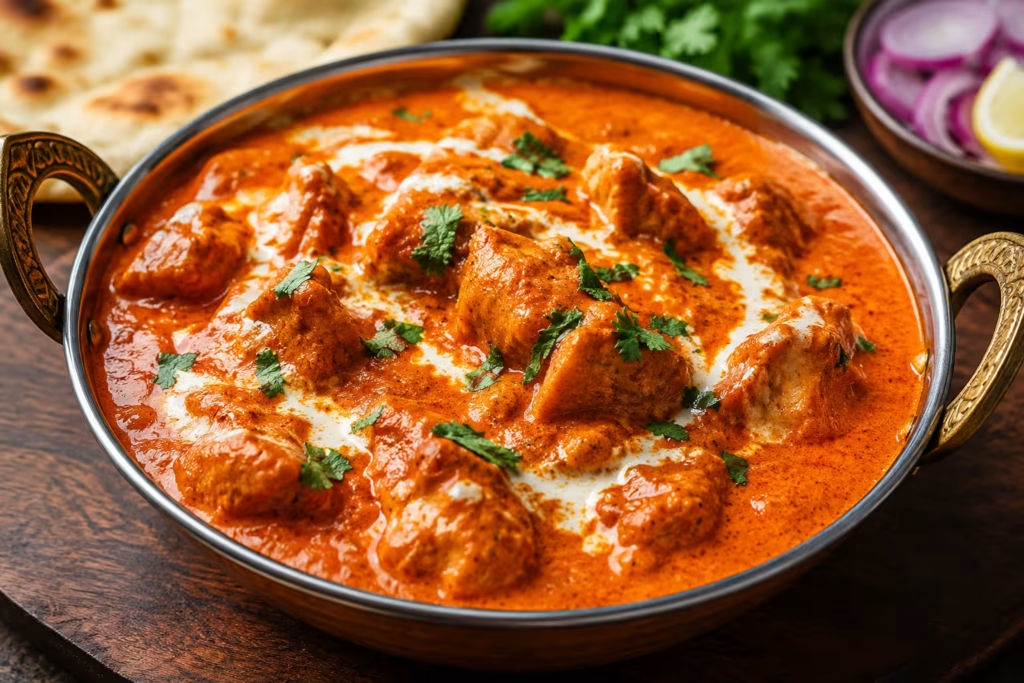
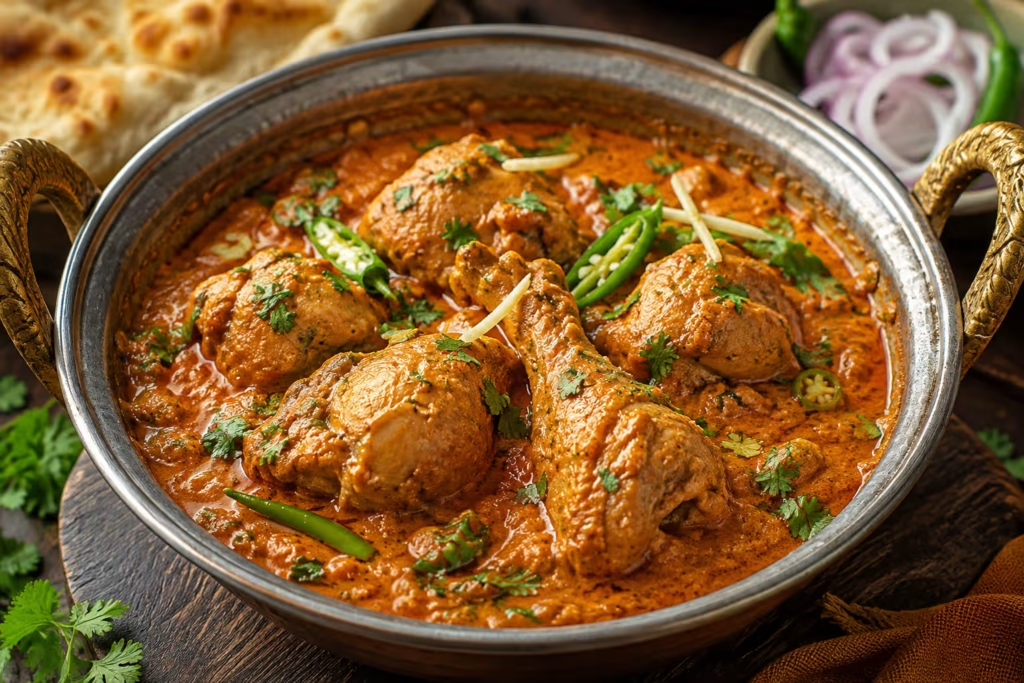
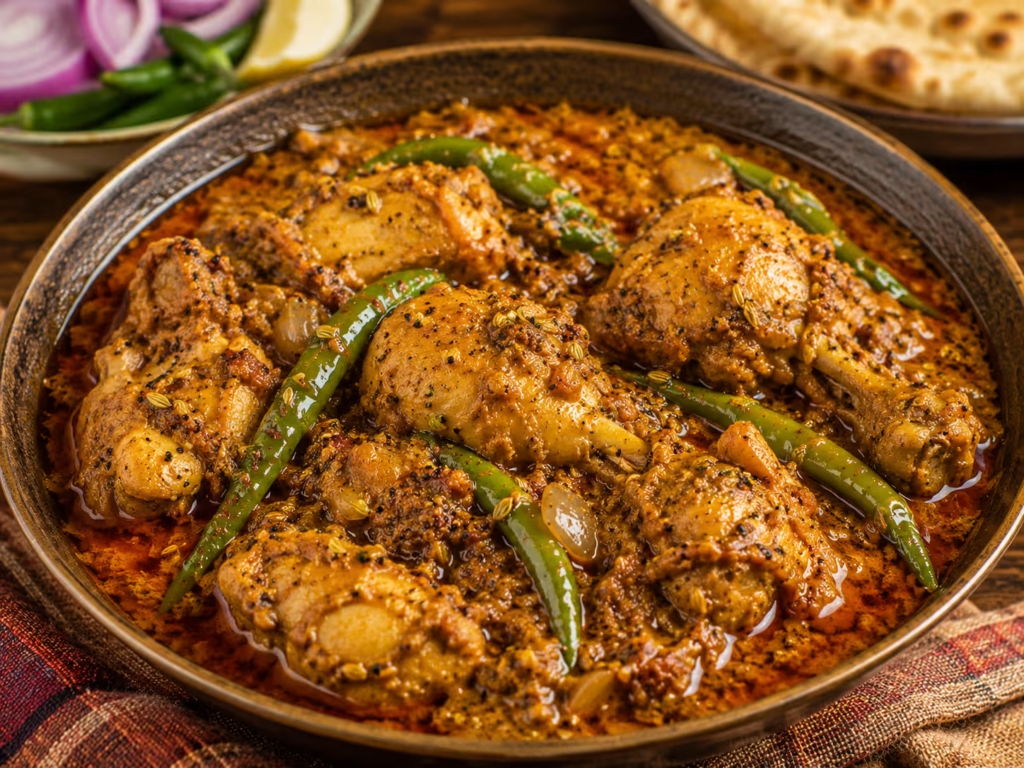
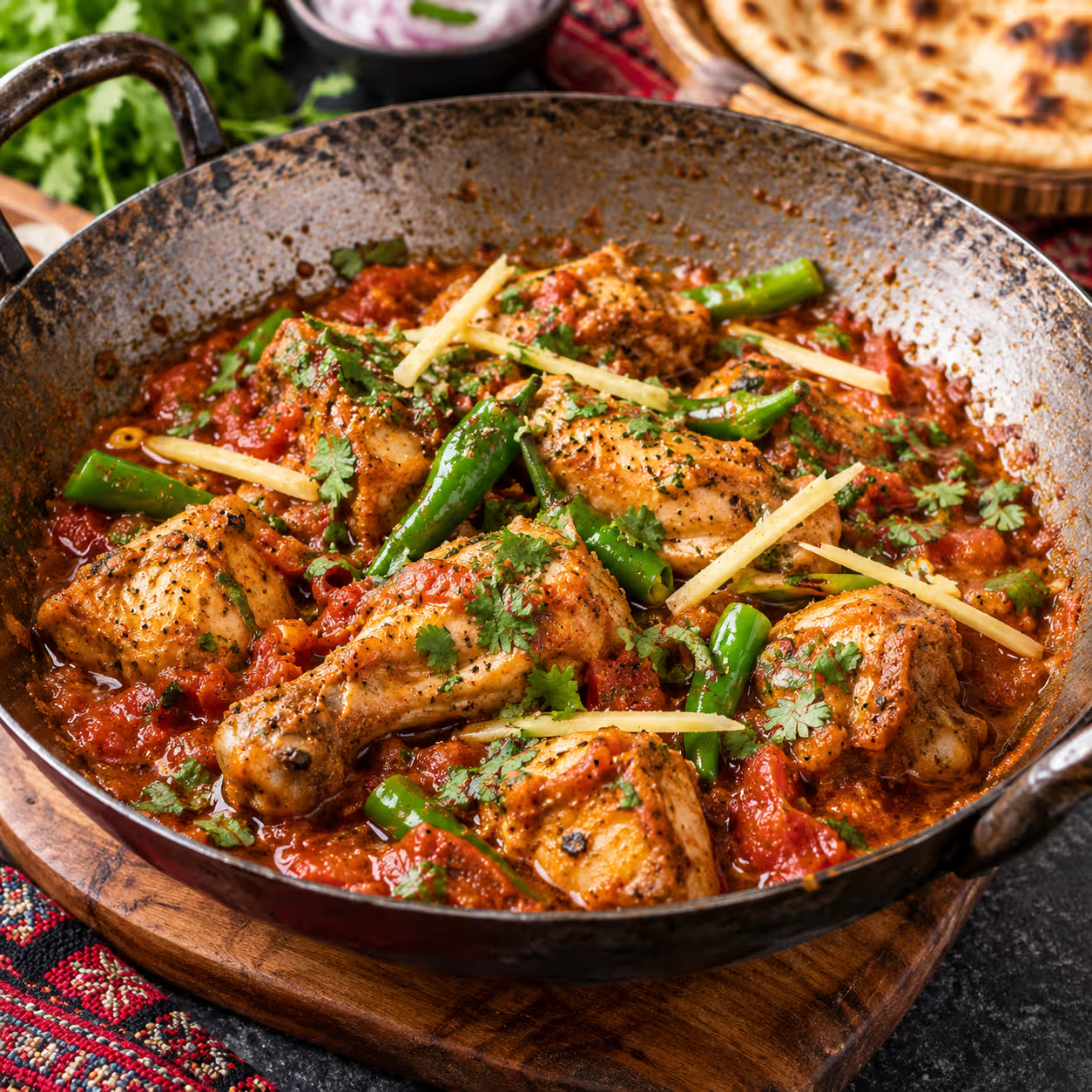
Lahori Chicken Karahi is a flavorful Pakistani chicken dish associated with Lahore and the wider Punjabi food tradition. It is prepared in a wide karahi with chicken, ripe tomatoes, ginger, garlic, green chilies, and aromatic spices. The ingredients are cooked together until the tomatoes break down into a rich, concentrated masala that coats the chicken.
A good Lahori chicken karahi recipe is not simply about adding more spices. The distinctive character comes from fresh ingredients, high-quality chicken, controlled heat, proper tomato reduction, and finishing the dish with fresh ginger, green chilies, and coriander.
This detailed guide explains how to make Lahori-style chicken karahi at home, how to choose the right chicken, how to control the tomato masala, how to adjust the spice level, how to achieve a restaurant-style finish, and how to troubleshoot common problems.
Lahore has a diverse food culture, and recipes vary between households and restaurants. Therefore, this recipe represents a traditional-style Lahori preparation, rather than claiming that one exact recipe is the only authentic version.
What Is Lahori Chicken Karahi?
Lahori Chicken Karahi is a regional-style Pakistani chicken preparation associated with Lahore, Punjab.
The dish gets its name from the karahi, the traditional wide cooking vessel in which many versions are prepared.
Unlike a typical chicken curry, which may contain a substantial amount of gravy, karahi is generally cooked until the tomato-based masala becomes concentrated.
The finished dish should have:
- Tender chicken
- Thick tomato masala
- Fresh ginger
- Garlic
- Green chilies
- Balanced spices
- A noticeable fresh aroma
- Enough oil or ghee to carry the flavors
The masala should cling to the chicken rather than leave the pieces floating in a thin sauce.
What Makes Lahori Chicken Karahi Different?
Lahori Chicken Karahi belongs to the larger Pakistani karahi family, so it naturally shares ingredients and techniques with other regional versions.
Its distinctive identity comes from the combination of Lahore’s Punjabi food culture and karahi-style cooking.
A Tomato-Forward Flavor
Fresh tomatoes form a major part of the masala.
They provide acidity, moisture, sweetness, color, and body.
Fresh Aromatics
Ginger and garlic form the savory foundation, while fresh ginger is also useful as a finishing ingredient.
Green Chili
Green chili adds fresh heat and aroma.
Concentrated Masala
The tomato mixture is reduced until thick.
Bold but Focused Flavor
The dish does not need a very long list of spices.
A focused combination allows the chicken and tomatoes to remain noticeable.
Is Lahori Chicken Karahi the Same as Pakistani Chicken Karahi?
Not exactly.
Pakistani Chicken Karahi is a broad category covering many regional and household preparations.
Lahori Chicken Karahi is a regional-style interpretation associated with Lahore.
Different cooks may use:
- Different quantities of tomatoes
- Different chili levels
- Onion or no onion
- More or fewer spices
- Different cooking times
- Different finishing ingredients
Therefore, it is better to think of Lahori Chicken Karahi as part of the broader Pakistani karahi tradition.
Is Lahori Chicken Karahi Authentic?
There is no universally standardized recipe for Lahori Chicken Karahi.
A restaurant in Lahore may prepare it differently from a family kitchen, and two households may use different proportions of tomatoes, chilies, or spices.
For this reason, “traditional Lahori karahi” should describe a regional cooking style, not a claim that one recipe represents every Lahori cook.
The method in this article emphasizes the characteristics commonly associated with a tomato-rich, fresh, concentrated Lahori-style chicken karahi.
Ingredients for Lahori Chicken Karahi
Chicken
- 1 kg bone-in chicken, cut into medium pieces
Bone-in chicken is recommended because it generally remains flavorful and works well with the cooking method.
Tomatoes
- 500–600 g ripe tomatoes, finely chopped
Use ripe, flavorful tomatoes.
Cooking Fat
- ½ cup cooking oil or ghee
You can adjust the quantity according to your preference.
Aromatics
- 1 tablespoon ginger-garlic paste
- 1–2 tablespoons fresh ginger, julienned
- 3–5 green chilies, slit
- ½ cup fresh coriander, chopped
Ground Spices
- 1 teaspoon red chili powder
- 1 teaspoon ground coriander
- ½ teaspoon cumin
- ½ teaspoon black pepper
- 1 teaspoon salt, or according to taste
Optional Ingredients
Depending on your preferred style, you may use:
- Extra green chilies
- Crushed coriander
- Freshly ground black pepper
- A small amount of ghee for finishing
- Lemon wedges for serving
The optional ingredients should complement the dish rather than overwhelm its basic tomato-and-chicken character.
Choosing the Best Chicken for Lahori Karahi
Chicken selection affects both flavor and texture.
Bone-In Chicken
Bone-in chicken is an excellent choice for karahi.
It tends to remain juicy and provides a deeper savory flavor.
Chicken Thighs
Thigh meat is flavorful and relatively forgiving.
It is useful if you want chicken that remains tender during longer cooking.
Chicken Breast
Breast meat can be used, but it cooks faster and can become dry if overcooked.
If using breast meat, reduce the cooking time and monitor it carefully.
Mixed Chicken Pieces
A combination of thighs, drumsticks, and other bone-in pieces works well for family meals.
Why Ripe Tomatoes Are Important
Tomatoes are one of the main flavor components in Lahori Chicken Karahi.
Good tomatoes provide:
- Acidity
- Natural sweetness
- Moisture
- Color
- Body
- Fresh flavor
If the tomatoes are bland, the finished karahi may also taste flat.
If Your Tomatoes Are Very Watery
Do not compensate by immediately adding more spices.
Instead, allow the excess moisture to evaporate during the final uncovered cooking stage.
If Your Tomatoes Are Very Acidic
Cook them thoroughly and reduce them before making the final seasoning adjustment.
How to Make Lahori Chicken Karahi
Prepare Everything Before Cooking
Cut the chicken into medium pieces.
Chop the tomatoes.
Prepare the ginger-garlic paste.
Slit the green chilies.
Julienne the fresh ginger.
Chop the coriander.
Measure the spices.
Karahi cooking moves relatively quickly between stages, so having the ingredients ready makes the process easier.
Heat the Karahi
Place a heavy karahi or wide wok over medium-high heat.
Add the oil or ghee.
Allow it to become properly hot.
A wide cooking vessel is particularly useful because it provides room for browning and later allows moisture to evaporate.
Brown the Chicken
Add the chicken pieces.
Cook over medium-high heat while stirring occasionally.
Allow the exterior to develop some light color.
Do not add a large amount of water at this stage.
The objective is to develop a savory base before the tomatoes are introduced.
Add Ginger and Garlic
Add the ginger-garlic paste.
Cook for approximately 1–2 minutes.
Stir continuously enough to prevent burning.
The garlic should become fragrant without becoming dark or scorched.
Add the Tomatoes
Add the chopped tomatoes.
Stir thoroughly.
The tomatoes will release their natural moisture.
At this point, the mixture may look much more liquid than the finished dish.
That is normal.
Add the Spices
Add:
- Red chili powder
- Ground coriander
- Cumin
- Black pepper
- Salt
Mix everything well.
Keep the heat controlled so the spices do not burn.
Cook the Chicken
Cover the karahi.
Reduce the heat to medium-low.
Cook until the chicken is fully cooked and tender.
Chicken usually does not require the long cooking time needed for mutton or beef.
If the mixture becomes too dry before the chicken is cooked, add a small amount of hot water.
Avoid adding a large quantity.
Reduce the Tomato Masala
Once the chicken is cooked, remove the lid.
Increase the heat to medium.
Cook uncovered while stirring regularly.
Allow the excess moisture to evaporate.
This is one of the most important stages of the recipe.
Continue cooking until the tomato mixture becomes:
- Thick
- Concentrated
- Glossy
- Richly colored
- Able to coat the chicken
Oil may begin appearing around the edges.
Add Green Chilies
Add slit green chilies during the final stage.
Cook for a few minutes.
This helps release their aroma while retaining some of their fresh character.
Finish With Fresh Ginger and Coriander
Add julienned fresh ginger and chopped coriander.
For an especially rich finish, add a small amount of ghee.
Turn off the heat.
Allow the karahi to rest for several minutes before serving.
How to Get the Perfect Karahi Consistency
Consistency is one of the easiest ways to tell whether your dish has been reduced properly.
Too Thin
If the masala flows freely like soup, continue cooking uncovered.
Correct
The masala should cling to the chicken.
It should be thick enough to coat the pieces while remaining moist.
Too Dry
If the masala has become excessively dry, add a small amount of hot water and simmer briefly.
The goal is not to remove all moisture.
The goal is to remove excess moisture.
The Importance of Tomato Reduction
A common mistake is stopping the cooking process as soon as the chicken is cooked.
Chicken may be done, but the karahi may not yet be finished.
The tomatoes need additional cooking so that:
- Raw tomato flavor disappears
- Water evaporates
- Acidity becomes more balanced
- Spices integrate
- Oil separates slightly
- Masala becomes concentrated
This is why the final uncovered cooking stage is so important.
How to Make Spicy Lahori Karahi
The heat level can be customized.
Mild Lahori Karahi
Use:
- 1–2 green chilies
- A smaller amount of red chili powder
Medium-Spicy Karahi
Use:
- 3–5 green chilies
- Moderate red chili powder
Spicy Lahori Karahi
Increase the green chilies gradually and adjust the red chili powder according to your tolerance.
Fresh green chilies are especially useful because they contribute both heat and aroma.
Should Lahori Chicken Karahi Contain Onion?
There is no single rule that every Lahori-style recipe must follow.
Some preparations may include onion, while others emphasize tomatoes and fresh aromatics.
For this version, onion is optional.
If you want the tomato flavor to remain dominant, use little or no onion.
A large quantity of onion can add sweetness and change the texture of the masala.
Does Lahori Chicken Karahi Need Yogurt?
No.
This version does not require yogurt.
The tomatoes provide the main acidic and liquid component.
Adding yogurt would produce a different flavor and texture profile.
If your goal is a fresh, tomato-forward karahi, yogurt is unnecessary.
How to Make Restaurant-Style Lahori Chicken Karahi
Restaurant-style results depend heavily on technique.
Use a Wide Cooking Vessel
A wide karahi helps moisture evaporate.
Brown the Chicken
Give the chicken some color before adding the tomatoes.
Use Good Tomatoes
Weak tomatoes produce weak masala.
Control Water
Add only what is necessary.
Reduce Properly
Do not stop cooking just because the chicken is done.
Finish With Fresh Ingredients
Fresh ginger, coriander, and green chilies create a stronger finishing aroma.
Use Ghee for a Rich Finish
A small amount of ghee at the end can provide additional richness without requiring a large amount throughout the recipe.
Traditional-Style Lahori Karahi Cooking Method
A useful way to understand the cooking process is to divide it into five stages:
Stage 1: Browning
Develop savory flavor in the chicken.
Stage 2: Aromatics
Cook ginger and garlic without burning them.
Stage 3: Tomato Cooking
Allow the tomatoes to soften and release their moisture.
Stage 4: Chicken Cooking
Cook until the chicken reaches the correct tenderness.
Stage 5: Reduction and Finishing
Reduce the masala and add fresh ginger, chilies, and coriander.
This staged approach is more reliable than simply adding everything to the pan at once.
Common Mistakes When Making Lahori Chicken Karahi
Adding Too Much Water
This creates a thin gravy.
Solution: Add water gradually and reduce the masala uncovered.
Using Unripe Tomatoes
They can create a harsh, acidic flavor.
Solution: Use ripe tomatoes.
Overcooking Chicken
Chicken can become dry and stringy.
Solution: Monitor doneness carefully, especially when using breast meat.
Burning Garlic
Burnt garlic introduces bitterness.
Solution: Cook ginger and garlic briefly over controlled heat.
Using Too Many Spices
A large number of spices can hide the chicken and tomato flavor.
Solution: Keep the spice profile focused.
Not Reducing the Masala
The dish can taste watery and underdeveloped.
Solution: Continue cooking uncovered after the chicken is done.
Adding Too Much Onion
Excess onion can make the dish sweeter and heavier.
Solution: Keep onion optional or use a small amount.
Troubleshooting Lahori Chicken Karahi
Why Is My Lahori Chicken Karahi Watery?
The most common reasons are:
- Too much water
- Very juicy tomatoes
- Insufficient reduction
- Cooking with the lid on for too long
Fix: Remove the lid and cook over medium heat until the excess liquid evaporates.
Why Is My Karahi Too Sour?
The tomatoes may be highly acidic.
Cook the masala longer and allow it to reduce.
Taste again before making additional adjustments.
Why Is My Chicken Dry?
You may have cooked it for too long.
This is particularly common with chicken breast.
Use shorter cooking times and consider bone-in chicken or thigh meat.
Why Is My Karahi Too Spicy?
Reduce the heat by increasing the volume of the tomato-based masala or combining it with additional cooked chicken if appropriate.
Avoid simply adding large amounts of raw water because that can dilute the flavor.
Why Does My Karahi Taste Bland?
Check:
- Salt
- Tomato quality
- Ginger
- Garlic
- Chili level
- Masala concentration
Too much water is another common cause.
Why Does My Chicken Karahi Taste Like Ordinary Chicken Curry?
The most likely causes are:
- Too much gravy
- Excess onion
- Excessive powdered spices
- Insufficient reduction
Reduce the masala and refocus the flavor around chicken, tomato, ginger, garlic, and green chili.
Lahori Chicken Karahi vs Peshawari Chicken Karahi
Both are regional-style Pakistani chicken karahi preparations, and their ingredients can overlap considerably.
| Feature | Lahori Chicken Karahi | Peshawari Chicken Karahi |
|---|---|---|
| Regional association | Lahore / Punjab | Peshawar / northwestern Pakistan |
| Chicken | Main protein | Main protein |
| Tomatoes | Prominent | Prominent |
| Green chilies | Important | Important |
| Fresh ginger | Important | Important |
| Regional context | Lahori/Punjabi food culture | Peshawari/northwestern food culture |
| Spice profile | Bold and tomato-forward | Often focused on fresh ingredients |
| Variations | Common | Common |
These are not rigid categories. Restaurant and household recipes can overlap significantly.
Lahori Chicken Karahi vs Chicken Handi
Although both are Pakistani chicken dishes, they have different characteristics.
Lahori Chicken Karahi
Typically emphasizes:
- Fresh tomatoes
- Ginger
- Garlic
- Green chilies
- Concentrated masala
- Wide-vessel cooking
Chicken Handi
Many versions emphasize:
- Cream or yogurt
- Richer sauce
- Smoother texture
- Different spice balance
They should be treated as separate recipes.
Lahori Chicken Karahi vs Chicken Curry
A conventional chicken curry often contains more liquid gravy.
Lahori Chicken Karahi generally aims for a concentrated tomato masala that coats the chicken.
The cooking vessel and reduction technique also help create the characteristic karahi texture.
Is Lahori Chicken Karahi a Punjabi Dish?
Lahore is in Punjab, and Lahori food forms part of the wider Punjabi culinary landscape.
It is therefore reasonable to describe Lahori Chicken Karahi as a Lahori/Punjabi-style Pakistani dish.
However, Punjabi cuisine is extremely diverse, and there is no single recipe that represents every Punjabi household.
The Role of Lahore in Pakistani Food Culture
Lahore is widely associated with a vibrant food culture that includes street food, traditional Punjabi dishes, grilled foods, breads, curries, and karahi-style preparations.
For food content, it is useful to distinguish between:
Lahori food identity and one fixed recipe formula.
A regional dish can have a recognizable culinary identity while still having many legitimate variations.
That is why this recipe focuses on the techniques and flavor relationships that define the style rather than claiming that every Lahori cook prepares it identically.
What to Serve With Lahori Chicken Karahi
Lahori Chicken Karahi is best served hot.
Naan and Roti
Excellent options include:
- Naan
- Tandoori roti
- Roghni naan
- Chapati
- Fresh roti
Rice
You can also serve:
- Steamed basmati rice
- Plain rice
- Jeera rice
Fresh Sides
Try:
- Sliced onions
- Lemon wedges
- Cucumber
- Green chilies
- Fresh coriander
- Plain yogurt
- Raita
Fresh sides help balance the richness and heat of the karahi.
How to Serve Lahori Karahi for Guests
For a restaurant-style presentation, transfer the finished karahi directly to a serving karahi or attractive shallow dish.
Top with:
- Fresh ginger
- Green chilies
- Fresh coriander
Serve naan separately.
For a family meal, keep sliced onions, lemon, and yogurt on the side so each person can adjust the meal according to preference.
How to Store Leftover Lahori Chicken Karahi
Store leftovers in a clean airtight container.
Refrigerate promptly.
For longer storage, divide the karahi into smaller freezer-safe portions.
Smaller portions are easier to reheat without repeatedly reheating the entire batch.
How to Reheat Lahori Chicken Karahi
Place the required portion in a pan.
Heat over medium-low heat.
If the masala has become very thick, add a small amount of water.
Heat thoroughly.
Avoid unnecessarily prolonged reheating because chicken can become dry.
Fresh coriander and ginger can be added after reheating.
Can You Freeze Lahori Chicken Karahi?
Yes.
For best quality:
- Cool the cooked karahi appropriately.
- Divide it into portions.
- Place in airtight freezer-safe containers.
- Label the containers.
- Thaw safely.
- Reheat thoroughly.
Fresh garnishes such as coriander and ginger are best added after reheating.
How to Scale the Recipe
For 2 People
Use approximately half the ingredients.
For 4 People
Use the recipe quantities provided above.
For 6–8 People
Scale the ingredients proportionally.
For large quantities, use a sufficiently large cooking vessel.
If the chicken is overcrowded, brown it in batches.
This prevents the chicken from releasing too much moisture at once.
How to Make Lahori Chicken Karahi for a Restaurant or Gathering
When cooking a large quantity, consistency becomes more important.
Brown in Batches
Avoid overcrowding the vessel.
Prepare Tomatoes in Advance
Chopped tomatoes can be prepared before cooking begins.
Maintain Consistent Heat
Large quantities take longer to heat and reduce.
Monitor the Final Masala
Do not judge the dish only by the cooking clock.
Judge it by:
- Chicken tenderness
- Tomato consistency
- Oil separation
- Masala thickness
- Final taste
Expert Tips for Better Lahori Chicken Karahi
- Choose flavorful ripe tomatoes.
- Use bone-in chicken when possible.
- Pat the chicken reasonably dry before browning.
- Heat the karahi before adding the meat.
- Brown the chicken properly.
- Never burn the ginger and garlic.
- Add water sparingly.
- Cook the chicken until just tender.
- Reduce the tomato masala thoroughly.
- Add green chilies toward the end.
- Finish with fresh ginger and coriander.
- Taste after reduction before adjusting salt.
- Use ghee for a richer finish if desired.
- Let the finished karahi rest for a few minutes before serving.
How to Tell When Lahori Chicken Karahi Is Ready
The chicken should be fully cooked and tender.
The tomatoes should no longer have a raw taste.
The masala should be thick and concentrated.
The sauce should cling to the chicken.
Some oil may be visible around the edges.
Fresh ginger, coriander, and green chili should provide a noticeable finishing aroma.
If the chicken is done but the sauce is watery, the dish still needs more reduction.
Recipe Testing Notes for ZaiqaHaus
For the strongest first-hand recipe experience, test the exact recipe before publishing and record:
- Chicken weight
- Tomato weight
- Oil quantity
- Spice measurements
- Actual cooking time
- Amount of water required
- Chicken cut used
- Final serving size
- Final masala consistency
These details can then be reflected consistently in the recipe card, article, photographs, and structured data.
This is especially valuable for a food website because readers benefit more from a tested recipe than from generic instructions.
Frequently Asked Questions About Lahori Chicken Karahi
What is Lahori Chicken Karahi?
Lahori Chicken Karahi is a regional-style Pakistani chicken dish associated with Lahore and Punjab. It typically combines chicken with fresh tomatoes, ginger, garlic, green chilies, and spices.
What is the secret to good Lahori Chicken Karahi?
The most important techniques are properly browning the chicken, using ripe tomatoes, controlling water, and reducing the tomato masala until it becomes thick and concentrated.
Is Lahori Chicken Karahi spicy?
It can be spicy, but the heat level is adjustable through the amount of green chili and red chili powder.
What chicken is best for Lahori Karahi?
Bone-in chicken is an excellent choice. Thigh meat is also useful when you want tender, flavorful chicken.
Can I use boneless chicken?
Yes. Boneless chicken works well, but it cooks faster and should be monitored to prevent drying.
Does Lahori Chicken Karahi use onion?
Some versions use onion while others focus primarily on tomatoes and fresh aromatics. Onion is optional in this recipe.
Does Lahori Chicken Karahi use yogurt?
It does not need yogurt. This tomato-forward version gets its acidity and body from fresh tomatoes.
Can I make Lahori Chicken Karahi without a karahi?
Yes. A wide, heavy-bottomed wok or pan can work well.
Why is my Lahori Chicken Karahi watery?
Usually because too much water was added, the tomatoes were particularly juicy, or the masala was not reduced long enough.
How do I thicken Chicken Karahi without flour?
Cook the tomato masala uncovered until the excess water evaporates. This naturally concentrates the sauce without adding flour.
Why does my karahi taste sour?
Highly acidic tomatoes can produce a sour flavor. Continue cooking and reducing the tomatoes before making further seasoning adjustments.
How do I make restaurant-style Lahori Chicken Karahi?
Use ripe tomatoes, brown the chicken, control moisture, reduce the masala properly, and finish with fresh ginger, green chilies, and coriander.
What should I serve with Lahori Chicken Karahi?
Naan, tandoori roti, chapati, basmati rice, sliced onions, lemon, and raita are excellent options.
Can I freeze Lahori Chicken Karahi?
Yes. Freeze it in airtight portions and reheat thoroughly. Add fresh coriander and ginger after reheating.
Related ZaiqaHaus Recipes and Guides
Explore more recipes within the ZaiqaHaus Pakistani food content structure:
Karahi Recipes
Your main Karahi collection can include:
- Chicken Karahi
- Lahori Chicken Karahi
- Peshawari Chicken Karahi
- Mutton Karahi
- Peshawari Mutton Karahi
- Beef Karahi
- Lamb Karahi
- Other regional karahi recipes
Chicken Recipes
Connect this page to the broader Chicken Recipes topic for readers who want additional Pakistani and international chicken dishes.
Punjabi Cuisine
Use this cluster to explain the wider culinary traditions of Punjab and provide context around Lahori food.
Regional Pakistani Food
This can connect Lahori dishes with Peshawari, Sindhi, Balochi, Kashmiri, and other regional food traditions.
Pakistani Home Cooking
This topic can provide practical everyday cooking techniques and family-style Pakistani recipes.
Final Thoughts
Lahori Chicken Karahi is a dish where technique matters as much as ingredients.
The recipe does not need an enormous spice list. The core combination of chicken, ripe tomatoes, ginger, garlic, green chilies, and carefully balanced spices can produce a deeply flavorful meal when cooked correctly.
The key is to work in stages:
Brown the chicken → cook the aromatics → add tomatoes and spices → cook the chicken → reduce the masala → finish with fresh ingredients.
The final masala should be concentrated enough to coat the chicken without becoming dry.
For a more restaurant-style finish, use a wide karahi, ripe tomatoes, fresh ginger, green chilies, and a small amount of ghee at the end.
Most importantly, remember that Lahori cuisine contains many household and restaurant variations. This recipe provides a traditional-style Lahori approach while giving you enough technique and troubleshooting information to adapt it to your own kitchen.