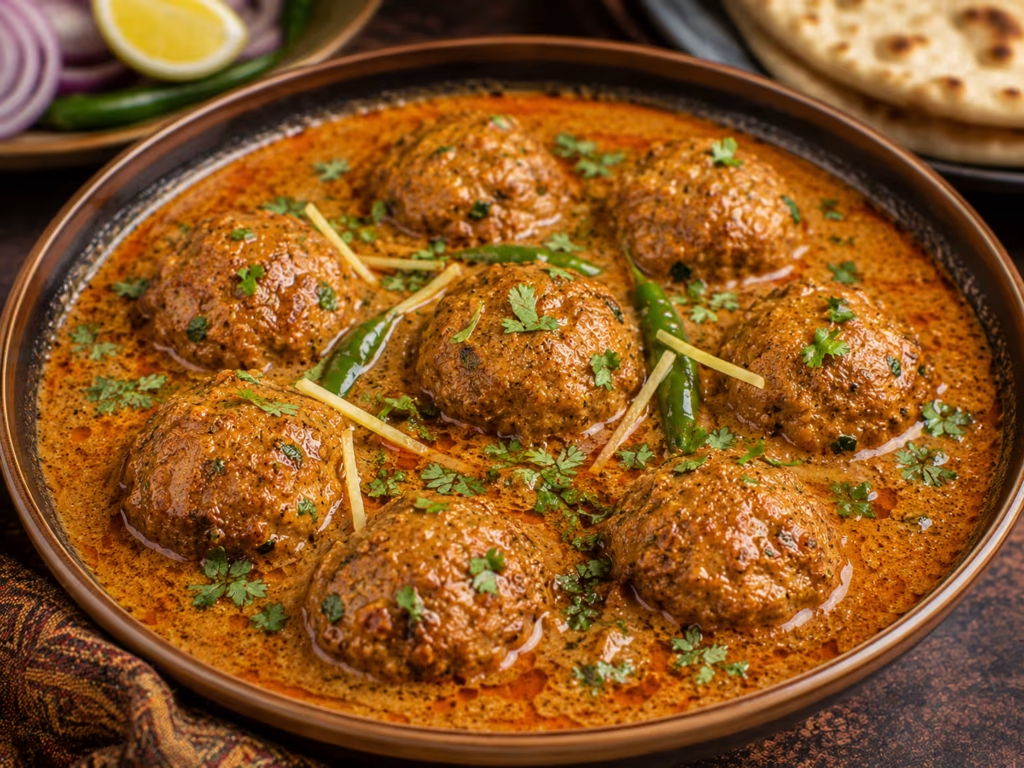

Boneless Mutton Karahi Recipe
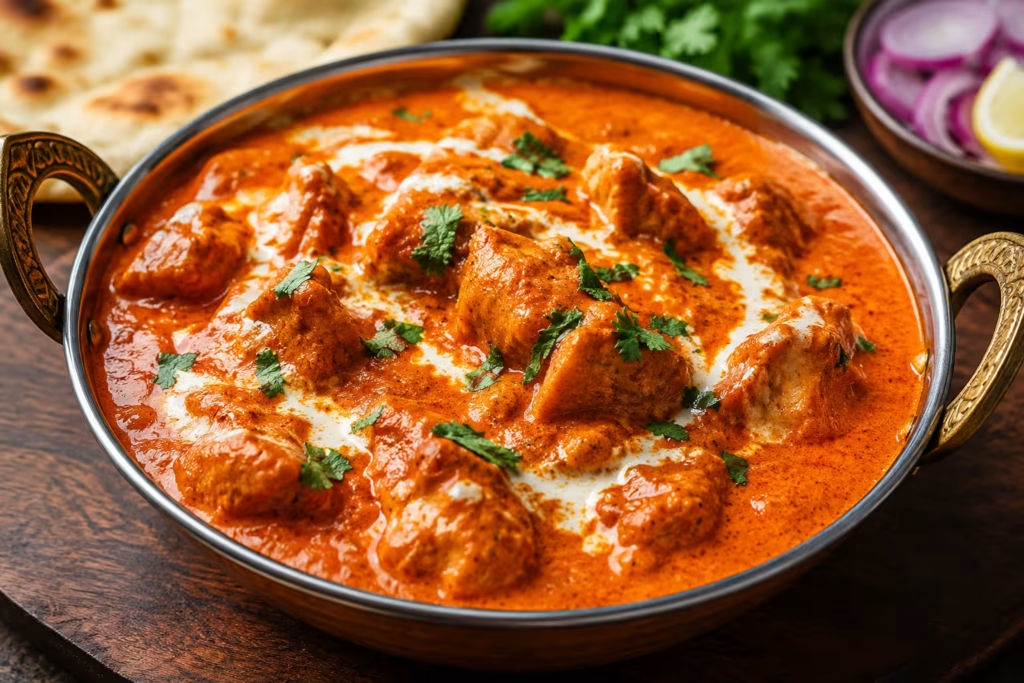
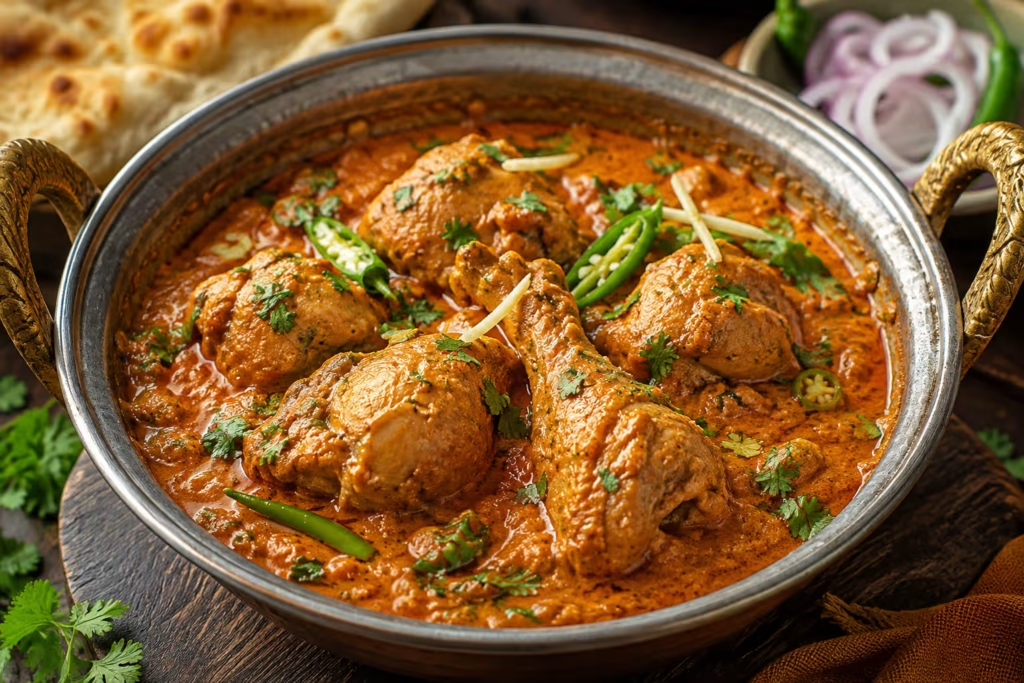
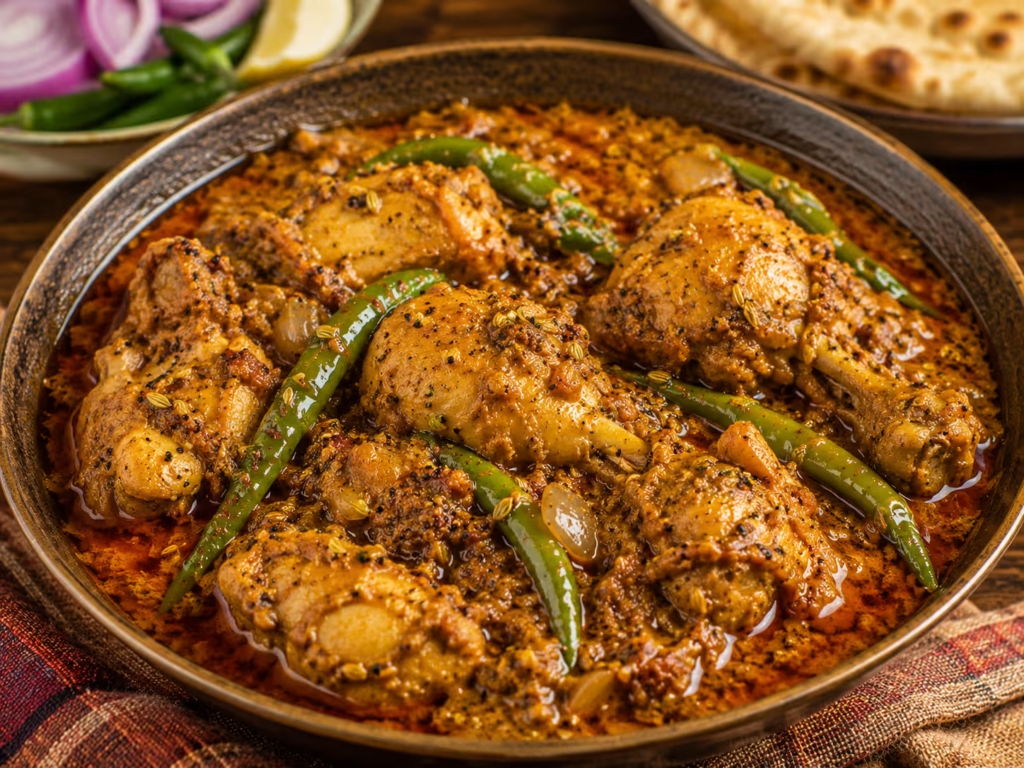
Boneless Mutton Karahi is a rich Pakistani-style meat dish made with tender boneless mutton, ripe tomatoes, ginger, garlic, green chilies, and aromatic spices. Removing the bones makes the dish easier to eat and portion while also making it practical for family dinners and guests who prefer boneless meat.
The key to a successful boneless mutton karahi recipe is choosing a suitable cut of mutton and cooking it until tender without drying it out. Unlike boneless chicken, mutton still needs sufficient time to soften because its connective tissue requires longer cooking.
This boneless Pakistani mutton karahi uses a thick tomato-based masala rather than a large amount of gravy. The meat is cooked with the aromatics and spices, then the masala is reduced until it coats the mutton.
For a convenient easy mutton karahi, a pressure cooker can be used to tenderize the meat before finishing it uncovered in a wide karahi. This method reduces the overall cooking time while preserving the thick, concentrated masala associated with karahi.
What Is Boneless Mutton Karahi?
Boneless mutton karahi is a Pakistani-style preparation in which pieces of boneless mutton are cooked in a concentrated masala of tomatoes, ginger, garlic, green chilies, and spices.
Traditional karahi cooking generally emphasizes:
- Fresh ingredients
- A wide cooking vessel
- Proper browning
- Controlled moisture
- Reduction of the masala
- Fresh ginger and coriander for finishing
Because the meat is boneless, it is particularly convenient to serve. There is no need to separate meat from bones while eating, making it suitable for family meals, dinner parties, and individual portions.
However, boneless does not automatically mean quick. The cooking time depends heavily on the cut of mutton.
Why Make Boneless Mutton Karahi?
Boneless mutton has several practical advantages.
Easier to Eat
There are no bones to remove while eating, making the dish convenient with naan, roti, or rice.
Easier Portioning
Boneless pieces can be divided more consistently among servings.
Convenient for Guests
Some guests prefer boneless meat, particularly when eating at a dinner table or buffet.
Thick Masala Clings to the Meat
Because the pieces are relatively compact, the reduced karahi masala coats the meat well.
Useful for Family Meals
Boneless pieces are easy to serve to both adults and older children.
Works With Different Cooking Methods
The mutton can be cooked traditionally in a karahi or tenderized first in a pressure cooker.
Ingredients for Boneless Mutton Karahi
Main Ingredients
- 1 kg boneless mutton, cut into medium-sized pieces
- 5 tablespoons cooking oil or ghee
- 5–6 medium ripe tomatoes, finely chopped
- 1½ tablespoons ginger paste
- 1½ tablespoons garlic paste
- 4–6 fresh green chilies, sliced
- 1½ teaspoons red chili powder
- 1 teaspoon Kashmiri red chili powder
- ½ teaspoon turmeric powder
- 1½ teaspoons ground coriander
- 1 teaspoon ground cumin
- ½ teaspoon freshly ground black pepper
- 1½ teaspoons salt, or to taste
- ½ teaspoon garam masala
- ½ cup fresh coriander, chopped
- 2 tablespoons fresh ginger, julienned
Optional Ingredients
You can also add:
- 2–3 tablespoons plain yogurt
- ½ teaspoon crushed dried fenugreek leaves
- 1–2 tablespoons lemon juice
- 1–2 tablespoons butter or ghee for finishing
- Additional green chilies for garnish
The optional ingredients are not required for the basic tomato-based karahi.
Choosing the Best Boneless Mutton
The cut of meat matters more when cooking boneless mutton because you do not have bones contributing moisture, fat, and connective tissue.
Boneless Shoulder
Shoulder is one of the more useful choices for slow cooking.
It contains connective tissue that can soften during cooking and help produce tender meat.
Boneless Leg
Leg meat is relatively lean.
It can produce excellent results, but careful cooking is important because very lean pieces can become dry if overcooked.
Boneless Neck
Boneless neck meat can be flavorful and suitable for slow cooking if properly prepared.
Avoid Extremely Lean Pieces
Very lean meat can become tough or dry if subjected to prolonged cooking.
For a rich boneless Pakistani mutton karahi, a moderately fatty cut with some connective tissue is generally preferable.
How to Prepare Boneless Mutton
Before cooking:
- Remove excessive surface fat.
- Cut the mutton into evenly sized pieces.
- Keep the pieces large enough to remain juicy during cooking.
- Pat the meat reasonably dry before browning.
Avoid cutting the mutton into very small pieces. Small pieces can lose moisture more quickly during the long cooking process.
How to Make Boneless Mutton Karahi
Step 1: Heat the Karahi
Place a heavy-bottomed karahi or wide skillet over medium-high heat.
Add the cooking oil or ghee.
Allow it to become hot before adding the meat.
Step 2: Brown the Mutton
Add the boneless mutton pieces.
Cook for several minutes, stirring occasionally, until the outside develops some browning.
Do not overcrowd the pan.
If necessary, brown the meat in batches.
Browning creates additional flavor before the tomato masala is introduced.
Step 3: Add Ginger and Garlic
Add ginger paste and garlic paste.
Cook for approximately 1–2 minutes until fragrant.
Stir regularly to prevent the garlic from burning.
Step 4: Add the Tomatoes
Add the chopped tomatoes.
Stir them thoroughly with the browned mutton.
The tomatoes will begin releasing moisture as they heat.
Step 5: Add the Spices
Add:
- Red chili powder
- Kashmiri chili powder
- Turmeric
- Ground coriander
- Ground cumin
- Black pepper
- Salt
Stir everything together.
Step 6: Cook the Tomato Masala
Continue cooking until the tomatoes become soft and begin breaking down.
The mixture should gradually become thicker.
Do not rush this stage.
A well-reduced tomato base produces a much more concentrated karahi flavor.
Step 7: Cook the Mutton Until Tender
Add a small amount of hot water if necessary.
Cover the pan and cook over low to medium heat until the boneless mutton becomes tender.
The exact time varies considerably depending on the cut and size of the pieces.
Check the meat periodically rather than relying solely on a recipe timer.
Step 8: Reduce the Masala
Once the mutton is tender, remove the lid.
Increase the heat moderately.
Allow excess moisture to evaporate.
Stir carefully until the tomato masala becomes thick and coats the mutton.
Step 9: Add Green Chilies
Add sliced green chilies.
Cook for several minutes.
For a fresher chili aroma, reserve some chilies for the final garnish.
Step 10: Add Garam Masala
Reduce the heat.
Add garam masala and fresh coriander.
Stir gently.
Step 11: Finish With Fresh Ginger
Add julienned fresh ginger and additional coriander.
The fresh ginger gives the finished dish a distinctive karahi aroma.
Step 12: Serve
Serve the boneless mutton karahi immediately with naan, roti, chapati, or basmati rice.
How Long Does Boneless Mutton Take to Cook?
Boneless mutton does not necessarily cook quickly simply because the bones have been removed.
Depending on the cut and cooking method, traditional stovetop cooking may take approximately 60–120 minutes or longer.
The actual time depends on:
- Mutton cut
- Size of pieces
- Age of the animal
- Heat level
- Pan type
- Amount of moisture
- Cooking method
Tenderness is a better indicator than a fixed cooking time.
How to Make Quick Boneless Mutton Karahi
If you want a quick mutton karahi, pressure cooking is one of the most practical methods.
The goal is not to rush the entire recipe. Instead, use pressure to shorten the tenderizing stage and then use a wide pan for the final reduction.
Quick Pressure-Cooker Method
- Brown the boneless mutton in oil or ghee.
- Add ginger and garlic.
- Add tomatoes and spices.
- Add an appropriate amount of water.
- Pressure cook according to your cooker and the specific cut of meat.
- Release pressure according to the manufacturer’s instructions.
- Transfer the meat and cooking liquid to a wide karahi if necessary.
- Cook uncovered until the masala becomes thick.
- Add green chilies.
- Finish with garam masala, coriander, and fresh ginger.
This produces a much faster result than trying to tenderize mutton entirely in an open karahi.
How to Know When Boneless Mutton Is Tender
Several signs indicate that mutton is ready:
- A fork or knife enters the meat relatively easily.
- The meat no longer feels rubbery or excessively firm.
- The connective tissue has softened.
- The pieces remain intact but are tender when bitten.
Avoid judging tenderness only by the color of the meat.
If it is still chewy, continue cooking with controlled heat and sufficient moisture.
Why Is My Boneless Mutton Tough?
Tough mutton can result from several factors.
The Meat Needs More Cooking
Mutton connective tissue takes time to soften.
The Cut Is Too Lean
Very lean meat can become dry before connective tissue has fully softened.
The Heat Is Too High
Aggressive cooking can cause the outside to dry before the interior becomes tender.
Pieces Are Too Large
Large pieces take longer to cook.
Insufficient Moisture
Mutton needs enough moisture during the tenderizing stage.
Overcooking After Tenderness
Once the meat is tender, continuing to cook it for a long time can negatively affect texture.
How to Keep Boneless Mutton Juicy
Choose a Suitable Cut
Moderately fatty shoulder or another suitable slow-cooking cut is preferable.
Avoid Very Small Pieces
Medium-sized pieces generally retain moisture better.
Brown Quickly
Use higher heat for initial browning, then reduce the temperature.
Cook Slowly
Controlled heat helps connective tissue soften.
Don’t Overcook After Tenderness
Once the meat is tender, move to the final masala reduction.
Boneless Mutton Karahi vs. Boneless Mutton Curry
These dishes can share ingredients but differ in cooking style and consistency.
| Feature | Boneless Mutton Karahi | Boneless Mutton Curry |
|---|---|---|
| Texture | Thick masala | Often more gravy |
| Cooking vessel | Karahi/wide pan | Pot or saucepan |
| Water | Usually limited | Often more |
| Tomato reduction | Strong emphasis | Varies |
| Garnishing | Ginger, coriander, green chili | Varies |
| Eating style | Especially good with naan/roti | Works well with rice or bread |
| Final consistency | Masala coats meat | More liquid gravy |
A boneless mutton curry can be made with similar ingredients, but it does not necessarily have the concentrated texture of karahi.
What Makes This a Pakistani-Style Boneless Mutton Karahi?
The combination of:
- Fresh tomatoes
- Ginger
- Garlic
- Green chilies
- Cumin
- Coriander
- Chili
- Fresh coriander
- Reduced masala
creates the characteristic flavor direction of this Pakistani-style preparation.
There is no single universal recipe for mutton karahi throughout Pakistan. Ingredients and cooking methods vary among regions, restaurants, and households.
Therefore, the recipe should be understood as a Pakistani-style boneless mutton karahi, rather than claiming that one exact ingredient list represents every traditional version.
How to Make Easy Mutton Karahi
The easiest approach is to organize the cooking into three stages:
Stage 1: Build Flavor
Brown the mutton and cook the ginger and garlic.
Stage 2: Tenderize
Cook the mutton with tomatoes, spices, and controlled moisture until tender.
Stage 3: Concentrate
Remove the lid and reduce the masala until it coats the meat.
This simple structure makes the recipe easier to manage and prevents unnecessary steps.
How Spicy Should Boneless Mutton Karahi Be?
The spice level is completely adjustable.
Mild
Use fewer green chilies and reduce red chili powder.
Medium
Use the quantities in the recipe.
Spicy
Increase green chilies and adjust red chili powder.
Very Spicy
Use hotter green chili varieties and add some fresh chili near the end.
A good spicy karahi should still allow the flavor of the mutton and tomato masala to remain noticeable.
Can You Add Yogurt?
Yes.
A few tablespoons of plain yogurt can create a richer masala.
If adding yogurt:
- Whisk it until smooth.
- Reduce the heat.
- Add it gradually.
- Stir continuously.
- Cook until incorporated.
However, yogurt changes the character of the dish. If you want a strongly tomato-forward boneless mutton karahi, you can leave it out.
Can You Make Boneless Mutton Karahi Without Tomatoes?
Yes, but it becomes a different preparation.
Tomatoes provide acidity, moisture, and body to this version.
A tomato-free version can use yogurt and additional aromatics instead.
However, this recipe is designed around a concentrated tomato masala.
Can You Add Onions?
Yes, although onions are not essential to this particular style.
Adding onions creates a sweeter and more substantial masala.
If you use onions, cook them until softened before proceeding with the tomatoes.
For a more tomato-forward karahi, keep the quantity of onion relatively small or omit it.
Can You Make It With Chicken Instead?
Yes, but chicken cooks much faster than mutton.
The recipe should not simply be transferred to chicken using the same cooking time.
If you want a faster chicken version, explore the relevant Chicken Recipes in your collection.
Best Side Dishes for Boneless Mutton Karahi
Naan
Fresh naan is ideal for scooping up the thick masala.
Tandoori Roti
Tandoori roti adds a smoky element.
Chapati
Chapati works well for an everyday meal.
Basmati Rice
Plain steamed basmati rice provides a neutral accompaniment.
Raita
Yogurt raita can provide a cooling contrast to spicy food.
Fresh Salad
Cucumber, onion, tomato, lemon, and coriander provide freshness.
How to Get Restaurant-Style Boneless Mutton Karahi
Restaurant-style flavor comes primarily from technique.
Use a Wide Pan
A wide cooking surface encourages evaporation.
Brown the Meat
Browning creates deeper savory notes.
Use Ripe Tomatoes
Good-quality tomatoes improve both flavor and color.
Don’t Add Excess Water
Use only enough moisture to tenderize the meat.
Reduce the Masala
The final sauce should cling to the mutton.
Finish With Fresh Ingredients
Fresh ginger, coriander, and green chili make the finished dish more aromatic.
Common Mistakes to Avoid
Assuming Boneless Means Fast
Boneless mutton can still require substantial cooking time.
Cutting the Meat Too Small
Small pieces can dry out.
Using Excess Water
This creates a thin curry instead of a thick karahi.
Not Reducing the Tomato Masala
The tomatoes need to cook down properly.
Overcooking Tender Meat
Once the meat is tender, move to final reduction.
Burning the Garlic
Burnt garlic can introduce bitterness.
Adding Too Many Spices
A long list of spices can mask the flavor of the meat and tomatoes.
How to Store Boneless Mutton Karahi
Transfer leftover karahi to an airtight container after cooling appropriately.
Refrigerate promptly.
When reheating:
- Use moderate heat.
- Stir occasionally.
- Add a small splash of water if necessary.
- Heat thoroughly.
Avoid repeatedly reheating the entire batch.
Can You Freeze Boneless Mutton Karahi?
Yes.
Divide the cooked karahi into practical serving portions.
Place the portions in airtight freezer-safe containers.
Thaw safely in the refrigerator before reheating.
After reheating, add fresh coriander, ginger, and green chilies to refresh the aroma.
How to Prepare Boneless Mutton Karahi Ahead
Boneless mutton karahi can be prepared ahead for guests.
A practical method is:
- Cook the mutton until tender.
- Refrigerate it safely.
- Reheat before serving.
- Reduce the masala again if needed.
- Add fresh garnishes just before serving.
This can make meal preparation easier when serving several people.
Cooking Tips for Better Boneless Mutton
Use Evenly Sized Pieces
This promotes consistent cooking.
Keep Some Natural Fat
A moderate amount of fat improves flavor and texture.
Brown Before Slow Cooking
Initial browning adds depth.
Use Controlled Heat
High heat is useful initially, while lower heat is better for tenderizing.
Taste the Masala Before Serving
Check salt, chili, acidity, and overall seasoning.
Garnish at the End
Fresh ingredients are most aromatic when added shortly before serving.
Frequently Asked Questions
What is boneless mutton karahi?
Boneless mutton karahi is a Pakistani-style dish made with boneless mutton cooked in a thick masala of tomatoes, ginger, garlic, green chilies, and spices.
Is boneless mutton faster to cook than bone-in mutton?
Removing the bones can affect cooking time, but it does not make mutton as quick to cook as chicken. The cut and connective tissue are major factors.
How long does boneless mutton take to cook?
Traditional stovetop cooking can take approximately 60–120 minutes or longer depending on the cut. A pressure cooker can significantly shorten the tenderizing stage.
Which cut is best for boneless mutton karahi?
Boneless shoulder and other suitable slow-cooking cuts with some connective tissue are useful choices.
Why is my boneless mutton tough?
It may need more cooking time, or the meat may be too lean. Cooking it with controlled heat and sufficient moisture can help.
Can I make this in a pressure cooker?
Yes. Pressure cooking is a practical way to shorten the tenderizing stage. Finish the dish uncovered in a wide pan to reduce the masala.
Is boneless mutton karahi a curry?
It can be considered part of the broader family of Pakistani meat curries, but karahi generally has a thicker, more concentrated masala than a conventional curry.
Can I use yogurt?
Yes. A small amount of plain yogurt can create a richer masala, although it changes the flavor profile.
Can I add onions?
Yes. Onions are optional and create a sweeter, fuller masala.
Can I make this recipe less spicy?
Yes. Reduce the green chilies and red chili powder.
What should I serve with boneless mutton karahi?
Naan, tandoori roti, chapati, basmati rice, raita, and fresh salad are suitable accompaniments.
Can boneless mutton karahi be frozen?
Yes. Freeze it in airtight portions, thaw safely, and reheat thoroughly.
Ingredients
- 1 kg boneless mutton
- 5 tablespoons cooking oil or ghee
- 5–6 medium ripe tomatoes
- 1½ tablespoons ginger paste
- 1½ tablespoons garlic paste
- 4–6 fresh green chilies
- 1½ teaspoons red chili powder
- 1 teaspoon Kashmiri red chili powder
- ½ teaspoon turmeric powder
- 1½ teaspoons ground coriander
- 1 teaspoon ground cumin
- ½ teaspoon black pepper
- 1½ teaspoons salt
- ½ teaspoon garam masala
- ½ cup fresh coriander
- 2 tablespoons julienned ginger
Instructions
- Cut the boneless mutton into medium-sized pieces.
- Heat oil or ghee in a heavy-bottomed karahi.
- Brown the mutton over medium-high heat.
- Add ginger and garlic and cook until fragrant.
- Add chopped tomatoes.
- Add the chili powder, Kashmiri chili, turmeric, coriander, cumin, black pepper, and salt.
- Cook until the tomatoes soften and form a thick masala.
- Add a small amount of hot water if needed.
- Cover and cook over low to medium heat until the mutton becomes tender.
- Remove the lid and reduce excess moisture.
- Add sliced green chilies.
- Add garam masala and fresh coriander.
- Garnish with julienned ginger and additional green chilies.
- Serve hot with naan, roti, chapati, or basmati rice.
Recipe Notes
For tender meat: Choose a suitable boneless cut and allow sufficient cooking time.
For a quick version: Use a pressure cooker for the tenderizing stage.
For a thicker masala: Reduce the sauce uncovered after the mutton is tender.
For more heat: Increase fresh green chilies.
For a milder version: Reduce the chili powder and use mild green chilies.
For richer flavor: Use a moderate amount of ghee instead of only oil.
For juicy meat: Avoid cutting the mutton into very small pieces or overcooking it after it becomes tender.
Related Recipes
Continue exploring the Zaiqahaus recipe collection:
The recommended topical hierarchy is:
Recipes → Karahi Recipes → Boneless Mutton Karahi
Because your /recipes/karahi-recipes/ URL covers Karahi recipes beyond chicken, it would be more accurate to treat it as your Karahi Recipes sub-pillar, rather than a Chicken Recipes pillar.
Final Thoughts
This boneless mutton karahi recipe is designed for cooks who want the rich flavor of Pakistani mutton karahi without bones in the finished dish. The most important part of the recipe is not simply removing the bones—it is selecting a suitable cut and giving the mutton enough time to become tender.
Once the meat is tender, the cooking changes from tenderizing to concentrating: uncover the pan, reduce the tomato masala, and allow it to coat the mutton. Fresh ginger, coriander, and green chilies provide the final layer of aroma.
For a faster easy mutton karahi, pressure cooking can shorten the tenderizing stage before the dish is finished in a wide karahi. Serve it hot with naan, tandoori roti, chapati, or basmati rice.